
# Semi Slick Motorcycle Tires: A Buyer’s Guide to Track-Day Performance That Stays Street Legal
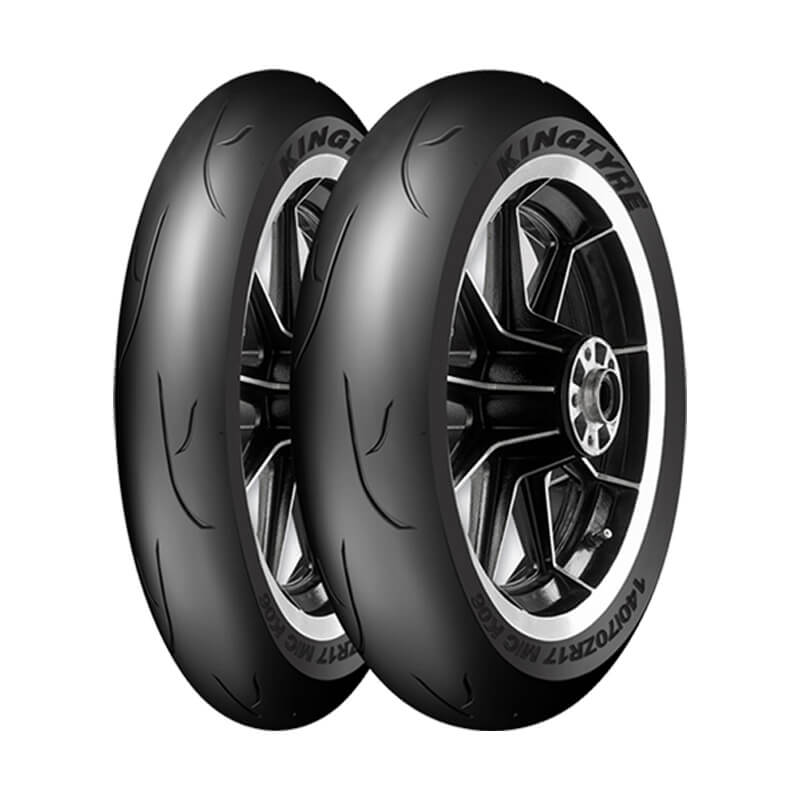
Semi slick motorcycle tires sit in the narrow performance gap between full FIM technical regulations for racing tires slicks and conventional hypersport road tires. . The K06 proves that high-performance semi slick motorcycle tires can be both accessible and road-legal. . Every aspect of the K06 design starts from the question: what does a rider need from semi slick motorcycle tires in real-world conditions? . For riders seeking genuine semi slick motorcycle tires, the K06 delivers performance that bridges the gap between pure competition rubber and everyday commuting rubber. . This makes the K06 one of the most versatile semi slick motorcycle tires available to importers today. . The growth in demand for semi slick motorcycle tires reflects a broader shift toward dual-purpose track-and-street riding. They give a track day rider 80% to 90% of the dry grip of a true slick while also keeping enough tread pattern to clear standing water and meet the legal requirements that let the same bike roll out of the paddock, onto a highway, and into a parking spot at the hotel.
For riders who run a single set of tires all season — commuting on Monday, canyon carving on Saturday, and track day on Sunday — the K06 sits in a category that has grown by an estimated 35% in global demand over the last 5 years. That growth is driven by three forces: the rise of organized track day programs in the USA, Europe, and Southeast Asia; tightening noise and tire-labeling rules in the EU; and the wider availability of ECE certified semi slick tires at price points 20% to 40% below the major European brands.
This guide covers what a semi slick actually is, how the 4-compound Kingtyre K06 system is engineered, the 10 available sizes, the track day tire pressure chart sportbike riders use, and the regulatory framework that makes a tire both legal and fast.
A full racing slick has a smooth, treadless contact patch. A pure road tire has a pattern covering 30% to 50% of the surface. A semi slick is a hybrid. The center 60% to 70% of the tread is nearly slick, with shallow grooves that meet minimum ECE R75 requirements. The shoulders — the part of the tire that does the actual work when the bike is leaned over 45 degrees — remain slick, with light rain channels cut into the outer 30% to evacuate water when the track is damp.
Consequently, that geometry matters because a sportbike at a 50-degree lean angle loads the contact patch almost entirely on the shoulder. As a result, keeping that area smooth preserves the dry grip that the rider is paying for, while the central grooves are what let the tire pass type approval.
The 4-compound K06 uses this layout across every size in the range. Kingtyre’s 15,000 m² factory in Tianjin produces the tires on automated curing presses under ISO 9001 quality systems, with a 300,000+ tire annual capacity feeding 40+ export markets.
Furthermore, most street tires come in one or two compounds. The K06 ships in four, letting a rider match rubber hardness to track temperature, race distance, and personal style.
| Compound | Peak Grip Window | Best Use | Estimated Lap-Time Delta |
|—|—|—|—|
| Ultra-soft | 55 to 75 °C | Sprint races, qualifying, cool mornings | Baseline (fastest) |
| Soft | 60 to 85 °C | Club-level track days, 15–25 min sessions | +0.3 to 0.5 s/lap |
| Medium | 70 to 100 °C | All-day track days, mixed ambient temps | +0.5 to 1.0 s/lap |
| Hard | 90 to 120 °C | Endurance racing, hot asphalt, street use | +1.0 to 2.0 s/lap |
Each step up in hardness typically costs 0.3 to 1.0 seconds per lap on a 90-second lap, but pays back in 2× to 3× the tire life. For street commuting, medium or hard is the rational choice. For a pure track day rider, soft or ultra-soft is the default.
In addition, the operating envelope is wide: soft compound is stable from 40 °C to 85 °C surface temperature; hard holds up to 120 °C. Surface temperature, not ambient, is what matters. A 30 °C morning can produce a 50 °C track; a 25 °C afternoon can push asphalt to 60 °C within 20 minutes of a session.
The K06 line covers the 10 highest-volume sportbike sizes on the market.
**Front (2 sizes):**
– 110/70ZR17
– 120/70ZR17
**Rear (8 sizes):**
– 120/70ZR17
– 140/70ZR17
– 150/60ZR17
– 160/60ZR17
– 180/55ZR17
– 180/60ZR17
– 190/55ZR17
– 200/55ZR17
– 200/60ZR17
The 180/55ZR17 is the single highest-volume size globally. It fits the Yamaha YZF-R6, Kawasaki ZX-6R, Suzuki GSX-R750, Honda CBR600RR, Ducati Panigale V2, and Aprilia RS660. The 200/55ZR17 and 200/60ZR17 cover the liter-class superbikes: Yamaha R1, Kawasaki ZX-10R, Suzuki GSX-R1000, Honda CBR1000RR, BMW S1000RR, Ducati Panigale V4, and Aprilia RSV4. The 190/55ZR17 fits the hyper-naked segment (Yamaha MT-10SP, KTM 1290 Super Duke R, Ducati Streetfighter V4).
Front-size choice is straightforward: 120/70ZR17 for any 600cc+ sportbike, 110/70ZR17 for sub-400cc machines (Yamaha R3, Kawasaki Ninja 400, KTM RC390) and 250cc–400cc class.
In the European Union, Switzerland, the UK, Japan, Australia, and most of Southeast Asia, motorcycle tires sold for road use must carry an ECE R75 type-approval marking. The mark — a circled E followed by a number — is the difference between a tire you can register and insure for public road use, and one that lives permanently on a trailer.
Furthermore, the K06 carries full ECE R75 certification across the entire size range. That makes the tire a genuine street legal racing tires for motorcycles — usable in the morning commute, on a track day afternoon, and back home again. For importers and dealers, ECE compliance removes a major friction point: the tires can be sold through normal retail channels without a separate “race use only” disclaimer.
Die UNECE vehicle regulations for tire safety regulatory framework is the global benchmark. Most non-EU countries adopt ECE R75 by reference. ECE R75 specifies minimum tread depth, marking requirements, load and speed ratings, and bead-seat dimensions.
Cold pressure is set before the bike leaves the pit lane. Hot pressure is what you check with a gauge between sessions, when the tire is at operating temperature. The difference — typically 3 to 4 psi — comes from heat expansion.
The chart below covers every K06 size, paired with the recommended compound for that fitment. Numbers are starting points; final pressure depends on rider weight, bike geometry, and track surface.
| Size | Compound | Cold (psi) | Hot (psi) |
|—|—|—|—|
| 110/70ZR17 (front) | Soft | 28 | 30–32 |
| 120/70ZR17 (front) | Medium | 30 | 32–34 |
| 140/70ZR17 (rear) | Ultra-soft | 26 | 29–30 |
| 150/60ZR17 (rear) | Medium | 29 | 31–33 |
| 160/60ZR17 (rear) | Hard | 32 | 34–36 |
| 180/55ZR17 (rear) | Medium | 30 | 32–34 |
| 180/60ZR17 (rear) | Soft | 28 | 31–33 |
| 190/55ZR17 (rear) | Medium | 30 | 32–34 |
| 200/55ZR17 (rear) | Soft | 28 | 31–32 |
| 200/60ZR17 (rear) | Ultra-soft | 26 | 29–31 |
For instance, for pure street use, a 32 psi front and 34 psi rear baseline is a safe starting point. Add 1 to 2 psi for two-up riding or sustained high-speed highway use. Drop 1 to 2 psi for canyon carving where surface temperatures stay moderate.
If you do not own tire warmers, expect the first 2 to 3 corners of a session to be lower-grip. Meanwhile, cold soft compound reaches its 60 to 85 °C working window only after 2 to 4 laps of gentle warm-up. Cold tire pressure on a hot 35 °C day can be misleading — pressure rises 0.5 psi per 1 °C of surface temperature, so a tire that reads 30 psi cold in a 20 °C paddock will read 32 to 33 psi on a 35 °C track. The track day tire pressure chart sportbike is the reference baseline; the hot reading is the truth.
The K06 is fitment-approved for the dominant sportbike platforms:
– 250–400 cc class: Yamaha R3, R7 (with 180-section rear), Kawasaki Ninja 400, ZX-4RR, KTM RC390, Aprilia RS660
– Middleweight 600–750 cc: Yamaha YZF-R6, R7, Kawasaki ZX-6R, Suzuki GSX-R750, Honda CBR600RR, Ducati Panigale V2, Aprilia RS660
– Superbike 1000 cc: Yamaha YZF-R1, Kawasaki ZX-10R, Suzuki GSX-R1000, Honda CBR1000RR, BMW S1000RR, Ducati Panigale V4, Aprilia RSV4
– Hyper-naked 1000+ cc: Yamaha MT-10SP, KTM 1290 Super Duke R, Ducati Streetfighter V4, Aprilia Tuono V4
All 10 sizes fit OEM 17-inch wheels on production superbikes. Moreover, standard wheel weights are fine; no race-only balancing is required.
The K06 platform has been campaigned in amateur and professional series worldwide. It is not homologated for the top tier of MotoGP or World Superbike, but it is regularly used in:
– FIM Asia Road Racing Championship support classes
– European Supersport Cup
– MotoAmerica Superstock Series
– Local and regional track day series in the USA, Spain, Italy, Australia, and Thailand
Additionally, a semi slick racing tire at the club level typically delivers lap times within 1.0 to 1.5 seconds of a full slick on the same rider and machine. For most amateur and intermediate track day riders, that delta is smaller than the rider-development gap between sessions. The Tire Industry Association Association publishes general guidance on tire selection for track use; FIM technical regulations govern homologation for sanctioned racing.
Three construction choices separate the K06 from cheaper look-alikes.
1. Carbon-reinforced sidewalls. The sidewall carries the load during cornering forces of 1.2 to 1.5 g, when a 200 kg bike+ rider pushes 240 to 300 kg sideways through the contact patch. Carbon reinforcement resists flex, holding the tire’s profile against the rim under sustained high-load cornering. The result is more consistent feedback and lower wear rate over a session.
2. Computer-aided compound distribution. The K06 is built with a controlled rubber-density profile across the tread. Higher density on the shoulders (where heat builds during cornering) and lower density toward the center (where the tire runs cooler under straight-line acceleration) keeps the working temperature more uniform. The benefit is more consistent grip from corner entry to corner exit.
3. Rain-resistant shoulder tread. A full slick hydroplanes in standing water deeper than 1 to 2 mm. The K06’s shoulder grooves evacuate water at lean angles up to 30 degrees, giving a safety margin on damp roads and at the end of a wet track day session. A pure racing slick offers no such margin.
Finally, three practical points cover ownership.
Shelf life: 3 years from the date of manufacture when stored in a cool, dry, dark place (under 25 °C, below 70% humidity, away from direct sunlight and ozone sources). After first use, inspect the tire every 4 to 6 months for cracking, flat-spotting, or embedded debris.
Wear indicators: Each K06 carries 2 wear bars in the central tread. When the tread surface wears level with the bars, the tire has reached its minimum service depth and must be replaced. For track use, soft and ultra-soft compounds typically last 1,500 to 3,000 km of road riding or 8 to 15 track day sessions. Medium and hard compounds typically last 3,000 to 6,000 km of road use.
Daily street use: The K06 is fully ECE-certified for the road, so daily use is legal. Three caveats: first, expect 50% to 70% faster wear on rough asphalt or long commutes than a touring tire; second, in stop-and-go traffic the surface can overheat if idled in summer heat for more than a few minutes; third, wet grip, while better than a full slick, is still below a true rain tire — switch to a proper rain tire in sustained wet conditions.
However, for soft and ultra-soft compounds, tire warmers are essentially required. The 60 to 85 °C peak grip window is not reached until 3 to 5 laps of gentle riding on cold tires, and during those laps the rider is operating 30% to 40% below peak grip. A set of tire warmers set to 80 °C brings the tire into the working window before the bike leaves pit lane, eliminating the cold-lap penalty and extending tire life by 15% to 25% per session.
In contrast, for medium and hard compounds, warmers are optional but recommended for track use.
If you ride a 600cc to 750cc sportbike, the 180/55ZR17 semi slick tire is almost certainly the right rear fitment. It is the size chosen by Yamaha, Kawasaki, Honda, Suzuki, Ducati, and Aprilia for their middleweight platforms because it balances grip, profile, weight, and rotation mass.
Meanwhile, for liter-class superbikes, the 190/55ZR17, 200/55ZR17, or 200/60ZR17 is the right rear. The 200/60ZR17 gives a slightly taller profile (60% aspect ratio vs 55%). This translates to a larger contact patch at full lean and a more compliant ride over bumps — at the cost of slightly slower steering.
For a best semi slick tires for track day rider, the medium compound in 180/55ZR17 paired with a medium 120/70ZR17 front is the most versatile all-day setup: predictable warm-up, durable enough for 20-minute sessions, and quick enough for advanced-intermediate lap times.
1. How long do semi slick tires last on the street?
Expect 3,000 to 6,000 km on medium compound, 1,500 to 3,000 km on soft, under typical sport riding. Aggressive canyon use cuts that in half.
2. Are semi slicks safe in the rain?
Nevertheless, better than a full slick, worse than a road tire. The K06’s shoulder grooves evacuate water at lean angles up to 30 degrees. Avoid standing water deeper than 3 mm and painted lines when wet.
3. Brauche ich Reifenwärmer?
Yes for soft and ultra-soft compounds at the track. Warmers set to 80 °C eliminate the cold-lap penalty and extend tire life by 15% to 25% per session.
4. Can I balance them with regular wheel weights?
Yes. No race-only balancing or stick-on weights are required. Standard clip-on or adhesive weights work.
5. Are these tires road legal?
Yes. ECE R75 certification covers the entire size range for public road use in the EU, UK, Switzerland, Japan, Australia, and most of Southeast Asia.
6. What is the difference between the 4 compounds?
Soft and ultra-soft are for sprint and qualifying use, peak at 60 to 85 °C, and wear fastest. Medium is the all-rounder. Hard lasts longest and tolerates 90 to 120 °C surface temperatures, ideal for endurance or hot summer street use.
7. What psi should I use on the street?
Start at 32 psi front and 34 psi rear. Add 1 to 2 psi for two-up riding or sustained high-speed use. Drop 1 to 2 psi for canyon carving.
8. Will they overheat in traffic?
Under normal riding, no. Prolonged idling in summer heat can accelerate surface wear. Avoid holding the bike stationary on hot asphalt for more than 5 minutes at peak ambient temperatures.
9. Do they come with wear indicators?
Yes, two wear bars per tire in the central tread.
10. What is the shelf life?
3 years from manufacture when stored in a cool, dry, dark place below 25 °C and 70% humidity. Inspect every 4 to 6 months after first use.
The K06 is built for three groups.
Track day riders who street-commute their bikes. ECE R75 certification means the same tire that does a 1:55 at Laguna Seca is legal for the ride home. The 4-compound range covers a 15 to 120 °C ambient spread.
Mid-pack club racers. The K06’s racing pedigree in Asia Road Racing, European Supersport Cup, and MotoAmerica Superstock is documented. Lap times within 1.0 to 1.5 seconds of a full slick at club level, at a lower cost per weekend.
Importers and dealers. A full ECE-certified size range from 110/70ZR17 to 200/60ZR17, manufactured under ISO 9001 in a 15,000 m² facility, and shipped from Tianjin to 40+ countries. The wholesale economics make it competitive against premium European brands by 20% to 40% on landed cost.
For pure road commuters who never see a track, a hypersport touring tire will outlast the K06 by 2× to 3×. For a pure racer chasing tenths of a second, a full slick is faster. The semi slick sits exactly where its name suggests — in the middle — and the Kingtyre K06 is one of the most complete expressions of the category on the market.
– ECE R75 Type Approval — UNECE Vehicle Regulations
– FIM Technical Regulations — FIM Moto
– Tire Industry Association — tireindustry.org
– Kingtyre K06 Product Specifications and Pressure Charts
– ISO 9001:2015 Quality Management Certification — Kingtyre Tianjin Facility
 German
  English
  Spanish
  French
  Korean
  Japanese
  Italian
  Russian
  Dutch
Dutch  Danish
  Portuguese
  Polish
  Turkish
  Czech
Czech