
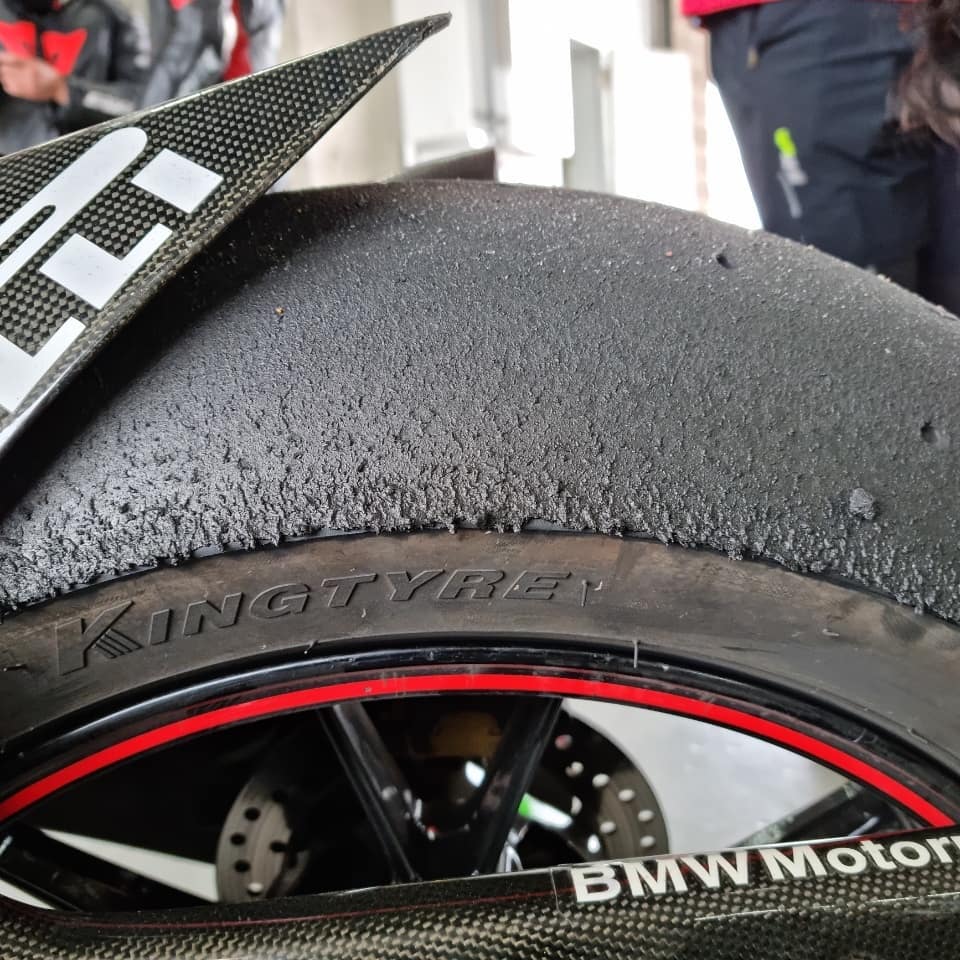
Every time a slick tire goes through a track session—heating up to operating temperature, then cooling back down—it accumulates one heat cycle. Understanding how many heat cycles can a slick tire handle before performance drops off is critical for budget-conscious racers. Each cycle permanently changes the rubber compound chemical structure, gradually reducing grip and lap time potential.
The question of how many heat cycles can a slick tire handle depends on compound type, driving style, and tire management. A set of slicks is a significant investment, and swapping them too early wastes money, while running them too long costs lap time—and sometimes safety.
The short answer: Most racing slick compounds deliver peak grip for 3–6 heat cycles, remain competitive for 10–20 cycles, and are fully cycled out by 25–40 cycles. But the exact number depends heavily on compound softness and how the tire is treated. For context on how this affects your track safety, see our guide on what causes tread cracking on slick tires.
A heat cycle is defined as:
Each cycle causes the polymer chains in the rubber compound to cross-link further. This process is called post-curing o compound hardening. The rubber gradually loses its elastic hysteresis—the ability to convert deformation energy into heat, which gives a slick tire its grip. The degradation is cumulative and irreversible. For industry testing standards on rubber compound durability, refer to ASTM International guidelines on polymer fatigue testing.
| Composto | Peak Grip (Cycles) | Competitive (Cycles) | Fully Cycled Out | Il miglior caso d'uso |
|---|---|---|---|---|
| Ultra-Soft | 1–3 | 5–10 | 12–15 | Qualifying, sprint races |
| Morbido | 3–5 | 8–15 | 15–20 | Club racing, track days |
| Medio | 4–6 | 12–20 | 20–30 | Endurance racing, practice |
| Duro | 5–8 | 15–25 | 25–40 | Long stints, heavy vehicles, hot tracks |
| Rain Slick | 2–3 | 4–8 | 8–12 | Wet sessions only |
Key insight: The softer the compound, the faster it reaches peak grip and the sooner it degrades. Harder compounds are more heat-cycle tolerant but never reach the ultimate grip level of soft compounds. The answer to how many heat cycles can a slick tire handle correlates directly with compound hardness.
A cycled-out tire will show lower surface temperatures after the same number of laps compared to a fresh tire, because it can no longer generate internal heat through hysteresis. For more on tire temperature measurement, see our racing slick tire pressure guide.
While heat cycling is inevitable, you can slow the damage:
| Practice | Effect |
|---|---|
| Use tire warmers (set to 70–80°C) | Reduces thermal shock by slowing cold-to-hot transition |
| Avoid overheating | Spiraling or sliding generates peak temps above 130°C |
| Store in cool, dark conditions | UV and ozone accelerate rubber degradation |
| Seal in plastic bags | Reduces oxygen exposure contributing to post-curing |
| Rotate tires left-to-right | Evens out cycle accumulation across the set |
| Avoid unnecessary warm-up laps | Every full heat cycle counts |
| Do not store near motors or generators | Ozone from electric motors attacks rubber compounds |
Track day enthusiast: You can comfortably run medium-compound slicks through 15–20 heat cycles before lap time degradation becomes noticeable.
Club racer: Replace soft-compound slicks after 6–8 cycles for qualifying and race use. Dedicate older tires (10–15 cycles) to practice sessions.
Endurance racing: Medium or hard compounds can last 20–30 cycles with proper management. For more about how Kingtyre tires perform in endurance conditions, read about Kingtyre motorcycle slicks vs premium brands and our EWC racing program.
Professional level: Fresh tires every session. Soft compounds: 1–2 cycles max for qualifying.
Kingtyre racing slicks are engineered with heat-cycle resilience as a core design parameter. Our medium-compound slick typically maintains competitive grip through 12–18 heat cycles in club racing conditions — on par with or exceeding equivalent compounds from established brands. We achieve this through polymer blend optimization that slows post-curing, carbon black grade selection for hysteresis retention, and consistent carcass construction.
Our technical data sheets include heat-cycle degradation curves for every compound. For deeper technical reading on rubber compound chemistry and heat cycling, resources from ACS Publications provide peer-reviewed research on polymer degradation in high-performance tire compounds.
Not recommended. A cycled tire has different grip levels and slip angle peak than a fresh tire, producing unpredictable handling.
No. Slicks are not designed for road use, and cycled-out tires have dangerously low grip levels, especially in wet conditions.
Shaving removes the top rubber layer but does not reverse heat cycle degradation in the remaining compound. A shaved cycled tire is still cycled.
For comprehensive data on tire rubber performance standards and testing protocols, visit the ETRTO (European Tyre and Rim Technical Organisation) for industry-standard tire testing guidelines.
 Italian
  English
  Spanish
  French
  German
  Korean
  Japanese
  Russian
  Dutch
Dutch  Danish
  Portuguese
  Polish
  Turkish
  Czech
Czech
Can Kingtyre Motorcycle Slicks Compete with Premium Brands? || Kingtyre dice:
[…] production tire benefits from world-class endurance racing insights. Related reading: our guide on slick tire heat cycles explains how Kingtyre compounds maintain grip through hundreds of racing […]
What Causes Tread Cracking on Slick Tires? || China King Tyre dice:
[…] you extract every last competitive lap from your tires. For related guidance, see our article on how many heat cycles a slick tire can handle to understand how cycling affects compound […]
Best Tire Pressure for Racing Slicks Guide || Kingtyre dice:
[…] Unlike street tires where manufacturers specify a single recommended pressure, slicks operate within a pressure window that shifts with track temperature, vehicle weight, and riding style. Understanding the best tire pressure for racing slicks means learning to read your tire behavior and adjust accordingly. This guide covers the ideal pressure range, how to measure it correctly, and how track conditions should change your setup. For more on tire wear management, see our guide on how many heat cycles a slick tire can handle. […]