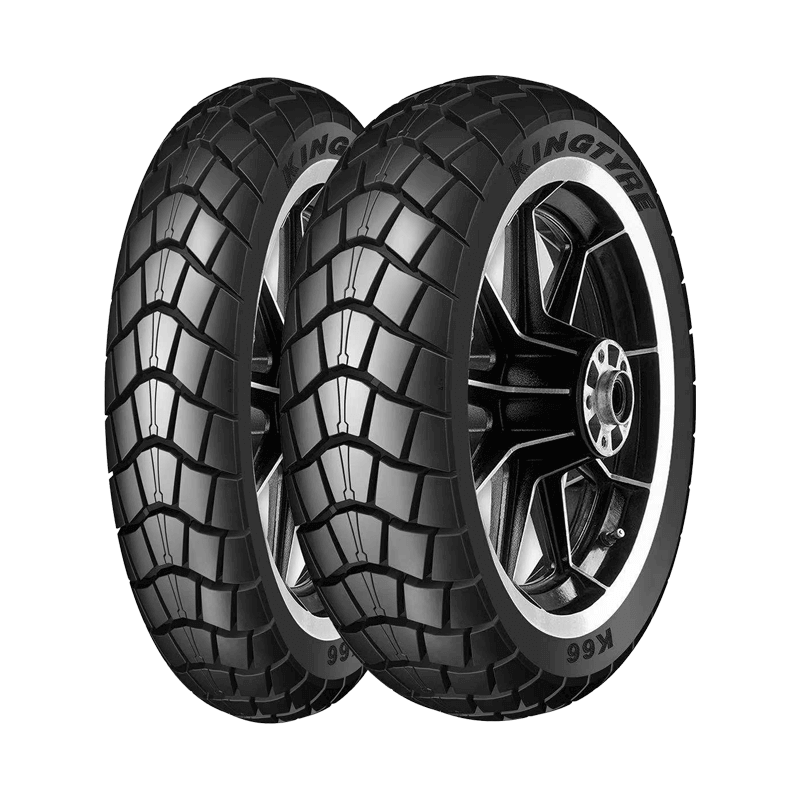
Quick answer: Na stránkách KingTyre K66 is our pick for the best 80/20 dual sport tire of 2026 for street-leaning ADV bikes, especially the 130/80-17 front and 150/70-17 rear sizes. It delivers ~90% of the on-road manners of a pure street tire, holds its own on the 20% gravel a typical dual-sport rider actually uses, and lands at 40-50% below the price of the European classics (Mitas E-07+, Bridgestone TW152) at wholesale. This page walks through how the K66 stacks up against the four other tires every 80/20 buyer cross-shops, and how to read the comparison for your bike and your riding style.
An 80/20 tire is built for riders who do mostly paved riding with the occasional gravel, fire road, or hard-pack detour. The “80/20” label refers to the rough split between on-road and off-road use — 80% tarmac, 20% loose surface. These tires prioritize stable, quiet performance on pavement while keeping enough tread pattern at the edges to handle dirt, gravel, and light trail work when the rider swings off the highway.
The difference between an 80/20 and a 50/50 (like the K67 90/10 in our lineup) is tread pattern aggressiveness and sidewall flexibility. A 50/50 tire has knobbier, more widely-spaced blocks that dig into loose terrain but feel less planted on tarmac. A 100% road tire (like a sport-touring tire) has minimal tread and no off-road capability — but lasts longer on pavement and handles better in the wet. The 80/20 sits between these two and is the right choice for the vast majority of riders who commute or tour on paved roads but want to take the long way home on a fire road.
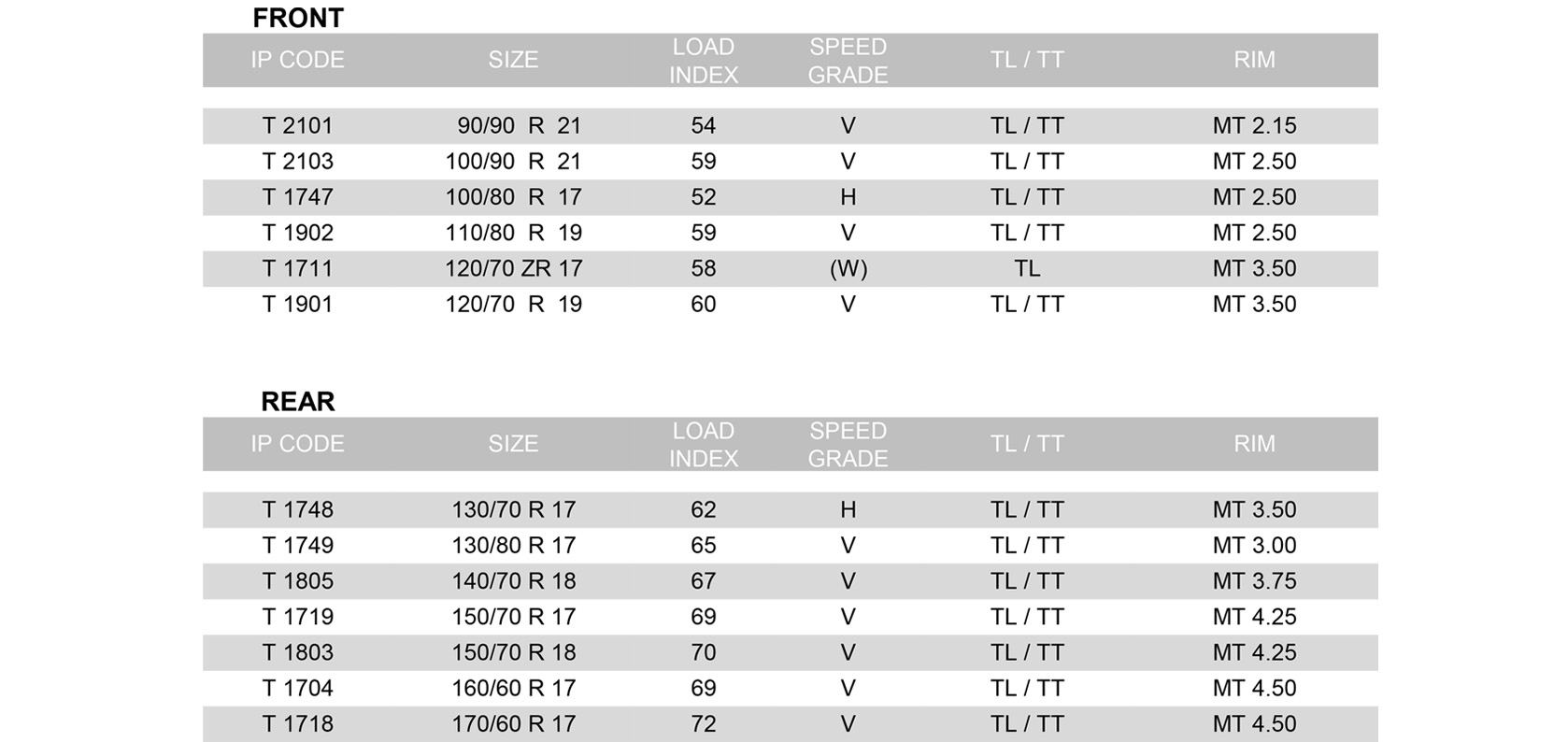
For sizing, the most popular 80/20 sizes for mid-displacement ADV and dual sport bikes are 130/80-17 front, 150/70-17 rear, 110/80-18 front, and 140/80-17 rear. Larger adventure bikes (KTM 1290, BMW R1250GS) often use 120/70-19 front and 170/60-17 rear. The K66 is available in the full popular range — see our K66 product page for the current size list.
The five tires below cover the bulk of the 80/20 market for 2026. Each is widely available, generally well-reviewed, and stocked by a real factory line rather than a re-branded white-label product.
| Tire | Best for | Key feature | Weakness | Price tier (wholesale) |
|---|---|---|---|---|
| 🥇 KingTyre K66 | Street-leaning ADV, dual sport commuters, value-focused distributors | Radial carcass, strong road manners, ECE R75 approved, 40-50% below European equivalents at wholesale | Less brand recognition outside Asia | 💲 (low) |
| 🥈 Mitas E-07+ | European ADV riders, established distributors, OE fitments | Proven pattern, dual compound, strong wear | Higher wholesale price, slower restock in some regions | 💲💲💲 (premium) |
| 🥉 Shinko 705 | American ADV / dual sport crowd, value buyers | Aggressive tread, fair price, widely stocked in North America | Shorter street life than K66, more road noise | 💲 (low) |
| IRC RX-02 | Japanese-market reliability seekers, smaller displacement bikes | Long wear, OE fitment for several Japanese brands | Limited size range in Western markets, modest off-road bite | 💲💲 (mid) |
| Bridgestone TW152 | OE fitments, brand-loyal riders, premium-tier replacement market | Brand trust, global availability | Highest price tier; modest off-road performance vs Mitas or Shinko | 💲💲💲 (premium) |
Each of these is a real contender depending on the buyer profile. The rest of this page walks through how each performs in the three dimensions that matter for an 80/20 tire: pavement manners, dirt capability, and total cost over the tire’s life.
The K66 was developed for the exact use case most 80/20 riders actually have: a 200-300 kg ADV bike ridden 90% on pavement with regular weekend gravel or forest-road detours. It is a radial construction tire (the rest of this list is mostly bias-ply), which gives the tread a flatter footprint on the road and a more even contact patch under braking.
Three specific design choices make the K66 stand out in head-to-head comparisons.
1. Center tread pattern. The K66’s center tread is a tightly-spaced block pattern that performs close to a street tire on tarmac — quieter than Shinko 705 and noticeably smoother than IRC RX-02 at highway speeds. The lateral blocks open up at the edges for off-camber grip on dirt.
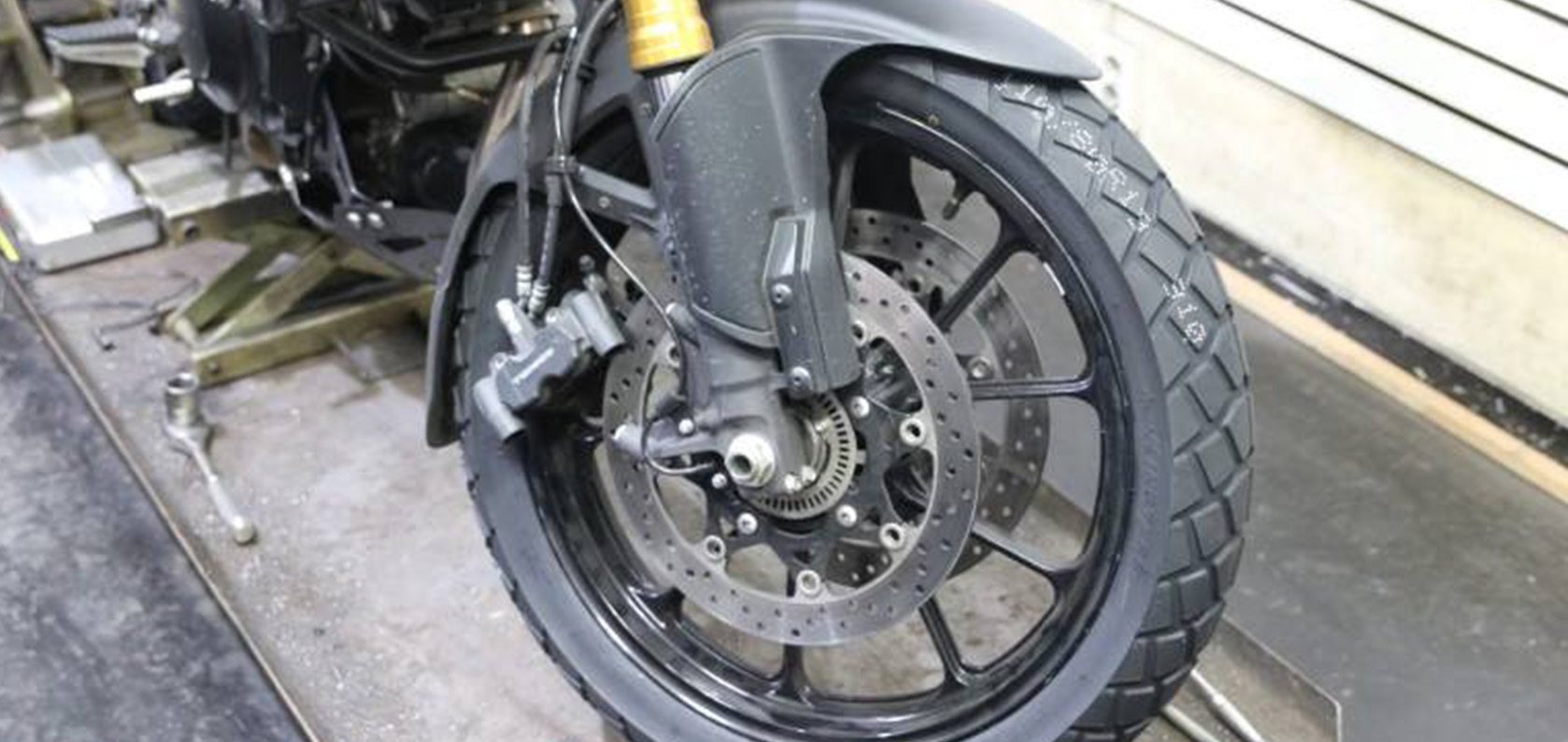
2. Radial carcass. The K66 uses a radial carcass (where most 80/20 competitors use bias). For a 130/80-17 front, the radial construction gives a softer sidewall that absorbs small bumps and uneven pavement — a tangible comfort improvement on long ADV rides. The trade-off is that the K66 has a slightly slower steering response than a bias-ply like the Shinko 705, which some riders prefer for tighter off-road work.
3. ECE R75 approval. The K66 is ECE R75 type-approved and DOT-compliant. For European and most export markets, that means legal registration out of the box — no need for importers to chase separate regional variants.
Where the K66 falls short: brand recognition outside Asia. Buyers who walk into a US dealer and ask for an 80/20 tire will hear Shinko or Bridgestone before they hear KingTyre. That changes once the wholesale comparison is done — at 40-50% less than the European premium tier, the K66 is the right pick for distributors and value-focused riders. For more on KingTyre’s production standards, see our Manufacturer Hub.
The Mitas E-07+ has been the European ADV benchmark for nearly a decade. It is sold across most of the EU, the UK, and increasingly North America through Mitas’s distribution network. The E-07+ is a bias-ply tire with a strong-wear compound and a tread pattern that performs well from wet pavement to loose gravel.
The case for E-07+: if you are an established distributor with an existing Mitas relationship, the E-07+ has zero switching cost. The wear life is excellent (typically 8,000-12,000 km for a mid-displacement ADV), the wet-pavement grip is class-leading for an 80/20 tire, and the tire feels stable at highway speeds.
The case against E-07+: the wholesale price is 2-3x the K66’s, and the supply chain is European. For a distributor in Latin America, Africa, or Southeast Asia, that price gap has to be passed on to the rider. The E-07+ also has limited size coverage for the smaller-displacement 80/20 market (smaller 17-inch and 18-inch fitments are less complete than the K66 line).
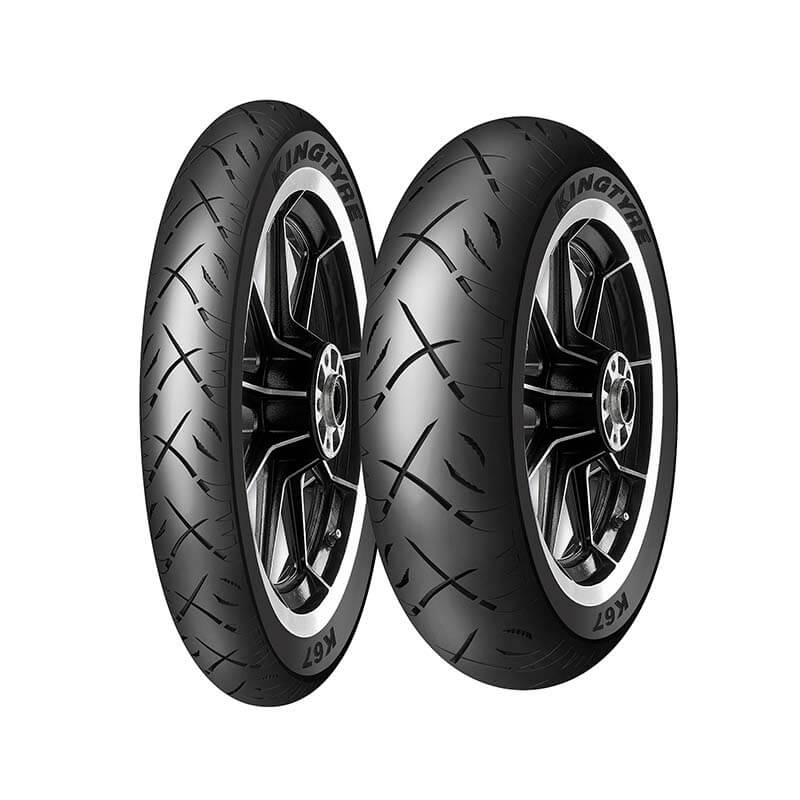
The Shinko 705 is the tire most American dual sport riders will recognize first. It has been around in one form or another for two decades, and the current generation balances aggressive dirt capability with acceptable street manners. The 705 is particularly popular for bikes that see real off-road use — light trail riding, fire roads, gravel connectors on adventure routes.
The case for Shinko 705: aggressive tread pattern, long American distribution history, fair price (in the same tier as the K66). The tire is at home on gravel, holds its own on wet pavement, and the sidewall is compliant enough for technical riding.
The case against Shinko 705: road noise is higher than the K66 or E-07+, and the wear life on pavement is shorter. For a commuter who does 80% paved miles and 20% gravel, the K66 is a quieter, longer-lasting alternative at a similar price point.
The IRC RX-02 is the OE fitment for several Japanese dual sport platforms, and the brand has decades of compounding experience in the Japanese domestic market. The RX-02 is a quiet, long-wearing 80/20 tire with a conservative tread pattern.
The case for IRC RX-02: if you ride a smaller-displacement Japanese dual sport (XR650L, DR650, DR-Z400, KLX250) and want a tire that wears slowly and stays predictable in mixed conditions, the RX-02 delivers. It is also widely distributed in Japan and through Japanese after-market channels.
The case against IRC RX-02: limited size availability in Western markets, modest off-road bite compared to Shinko or Mitas. For an experienced ADV rider who actually uses the off-road capability, the RX-02 is too tame.
The Bridgestone TW152 is the brand-loyal pick. Bridgestone’s ADV tire program has been more focused on the larger-displacement, premium-tier segment (Battlax Adventurecross, etc.), but the TW152 line remains the 80/20 reference for riders who trust the brand and want worldwide dealer support.
The case for TW152: brand trust, global dealer and warranty network, OE fitment on certain premium ADV platforms. For distributors and dealers who need a brand-name safety blanket for risk-averse riders, the TW152 has a long history.
The case against TW152: this is the most expensive tire on the list at wholesale. For distributors and riders who can compare on price-performance, the K66 or Mitas E-07+ give the same or better street manners at 40-50% lower landed cost. The TW152’s modest off-road performance is also a notable gap compared to the Mitas or Shinko.
If you are choosing between the five options above, work through these three questions in order.
The intersection of those answers is your tire. For most riders, the answer is the KingTyre K66 — especially if you are a distributor building a value-tier ADV product line, a commuter who wants long wear and stable on-road manners, or a rider who wants European-tier street manners at Asian-tier pricing.
The K66 is currently available in the most popular 80/20 sizes for ADV, dual sport, and trail bikes. Use this as a quick reference; the full up-to-date size list is on the K66 product page.
For distributors building a 130/80-17 front + 150/70-17 rear program around the K66, the typical first order is one mixed 20GP container with a front-to-rear size split around 45/55 — enough to seed dealer inventory and run a sell-through trial before scaling to a 40HQ program. For full container planning, see our import guide.
What does “80/20” actually mean?
A shorthand for tires designed for ~80% paved riding and ~20% unpaved or gravel riding. The tread pattern and rubber compounds are tuned for both, with bias toward pavement manners.
Is the K66 street legal?
Yes. The K66 carries ECE R75 type approval (EU, UK, and most UNECE markets) and DOT marking (US). KingTyre provides the type-approval certificate with every wholesale shipment — for the verification steps, see our Manufacturer Hub.
How does the K66 compare to the K67?
The K66 is an 80/20 tire (mostly road, some dirt); the K67 is a 90/10 tire (almost entirely road with light gravel capability). The K67 has a tighter center pattern and a more street-bias. For a commuter who never goes off-road, the K67 is the better pick; for a true 80/20 rider, the K66.
How long does the K66 last?
Typical wear life for a mid-displacement ADV bike is 8,000-12,000 km on a rear, 12,000-18,000 km on a front, depending on riding style, surface, and rider weight. The K66 wears evenly thanks to the radial carcass and lateral block design.
Can I run the K66 on a heavy ADV bike?
The K66’s size range covers the popular mid- and large-displacement ADV fitments (up to 150/70-17 rear). For large ADV bikes (KTM 1290, BMW R1250GS) the K66 holds up well at standard loads; for heavily-loaded touring with panniers and passenger, consider the Mitas E-07+ or a dedicated touring tire.
What about tire pressure for the K66?
Solo street: front 32 psi / rear 36 psi. Solo gravel: front 28 psi / rear 30 psi. Loaded touring: front 36 psi / rear 42 psi. The K66’s radial construction tolerates a wider pressure range than bias competitors.
Where is the K66 made?
The K66 is manufactured at the KingTyre factory in Tianjin, China. For certifications, factory tour information, and how to verify a wholesale shipment, see the Manufacturer Hub.
Who else runs the K66?
Distributors in Latin America, Southeast Asia, and Europe have begun stocking the K66 as a value-tier alternative to Mitas E-07+ and Shinko 705. Racing teams are not a target market for an 80/20 tire; if you need slicks or semi-slicks, see the K00 nebo K06 lines.
If you are an ADV or dual sport rider, the K66 is a fit-and-forget upgrade from the OE tire. If you are a distributor, the K66 is the most competitive wholesale 80/20 tire in the value tier — and pairs naturally with the K67 (90/10), K66, K91 (cruiser), and K00 / K06 (racing) lines for a full catalog.
Related reading:
 Czech
Czech  English
  Spanish
  French
  German
  Korean
  Japanese
  Italian
  Russian
  Dutch
Dutch  Danish
  Portuguese
  Polish
  Turkish