
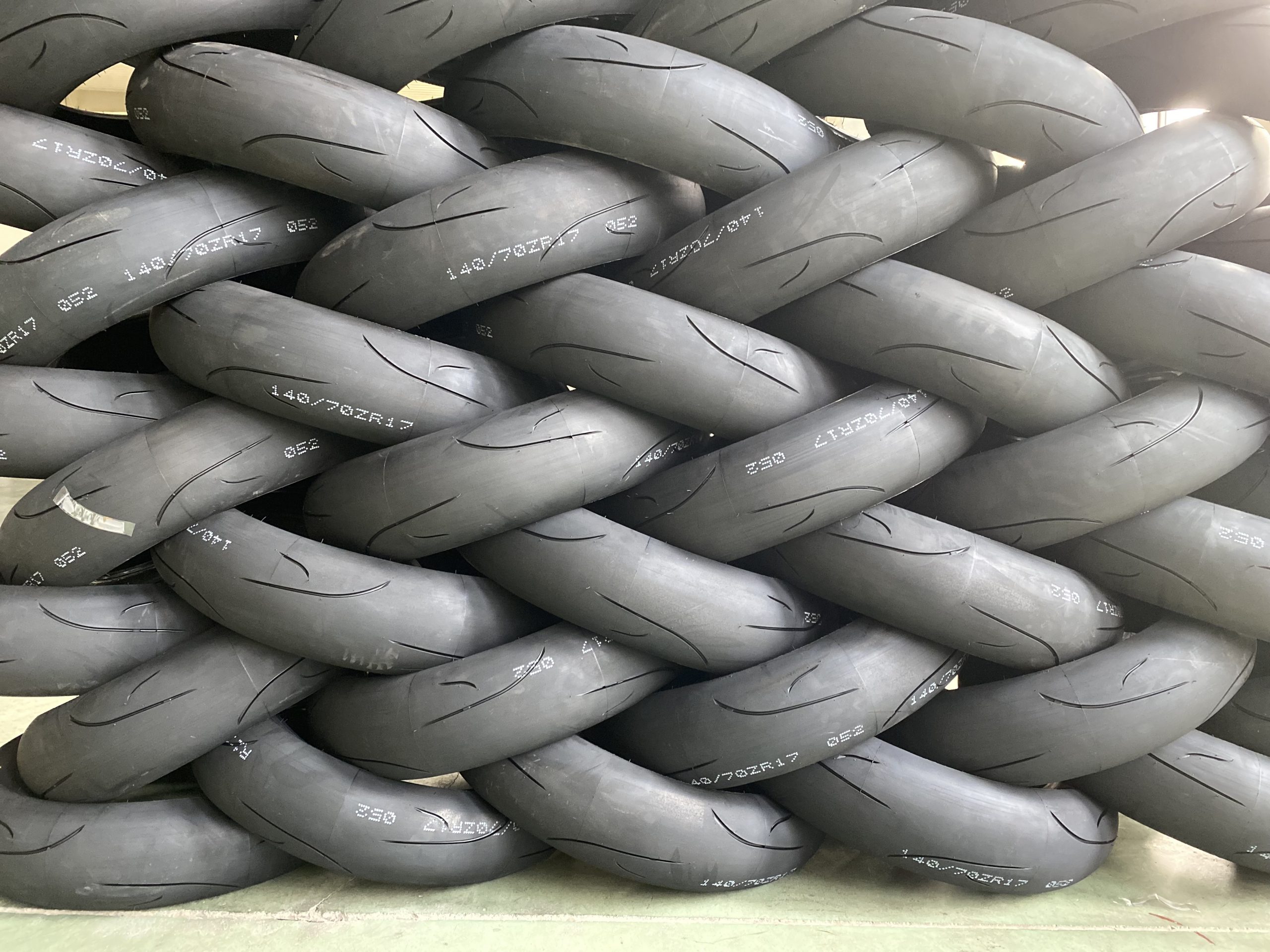
If you are involved in tire manufacturing, distribution, or private branding — or if you are considering entering the motorcycle tire market — one of the first questions is: how much does a motorcycle tire mold cost?
The answer to the motorcycle tire mold cost question varies dramatically based on tire size, mold complexity, production volume, and quality standards. Unlike car tire molds, which are relatively standardized, motorcycle tire molds must account for dramatically different profiles — from a scooter’s 10-inch rim to a superbike’s 17-inch performance radial.
Understanding the motorcycle tire mold cost is essential whether you are starting a new tire brand, expanding production capacity, or exploring OEM manufacturing partnerships. A motorcycle tire mold can cost anywhere from $5,000 for a basic used passenger tire mold to $150,000+ for a new, multi-cavity racing tire mold set. Most new molds for standard motorcycle tire sizes fall in the $15,000–$50,000 range per mold.
The motorcycle tire mold cost depends heavily on the type of mold you need. Here is a breakdown of pricing across the most common mold configurations:
| Mold Type | Typical Size | New Price Range | Used Price Range |
|---|---|---|---|
| Single-cavity passenger (scooter/cruiser) | 10–16 inch | $8,000–$18,000 | $3,000–$8,000 |
| Single-cavity sport/racing | 17 inch | $15,000–$35,000 | $5,000–$15,000 |
| Dual-cavity passenger | 10–16 inch | $25,000–$50,000 | $10,000–$20,000 |
| Multi-cavity (3–4) high-volume | Standard sizes | $60,000–$150,000+ | $30,000–$80,000 |
| Tubeless radial mold | 17–18 inch | $20,000–$45,000 | $8,000–$18,000 |
| Tire retreading mold | Various | $5,000–$12,000 | $2,000–$5,000 |
Note: Prices are for steel molds. Aluminum molds cost 15–25% less but have shorter service life.
The single biggest factor in motorcycle tire mold cost is the number of cavities. Each additional cavity adds significant machining complexity. A dual-cavity mold is not simply 2x the cost of a single-cavity — it is more like 1.6–1.8x because the mold plate must be larger and alignment tolerances tighter.
| Cavities | Cost Multiplier vs Single | Production Output |
|---|---|---|
| 1 | 1.0x (baseline) | 40–60 tires/day |
| 2 | 1.6–1.8x | 80–120 tires/day |
| 3–4 | 2.5–3.5x | 150–250 tires/day |
| Material | Cost Factor | Lifespan (cycles) |
|---|---|---|
| Steel (P20 / H13 tool steel) | 1.0x (baseline) | 50,000–100,000 |
| Aluminum (7075 / 6061) | 0.75–0.85x | 15,000–30,000 |
| Steel with chrome plating | 1.2–1.4x | 80,000–120,000 |
Where you source your mold significantly affects the total motorcycle tire mold cost:
| Origin | Price Range (Single-Cavity 17″) |
|---|---|
| China (mainland) | $12,000–$25,000 |
| Taiwan | $18,000–$35,000 |
| Italy / Germany | $30,000–$60,000 |
| Japan | $35,000–$75,000 |
Kingtyre sources its molds from Tier 1 Chinese and Taiwanese manufacturers, achieving comparable precision to European molds at 50–60% of the cost. For more on how this manufacturing quality translates to on-track performance, read our analysis of Kingtyre motorcycle slicks vs premium brands.
| Factor | New Mold | Used Mold |
|---|---|---|
| Price | 2–3x higher | Lower initial investment |
| Condition | Full service life ahead | May have 30–70% life remaining |
| Tread pattern | Customizable to your design | Fixed pattern — no customization |
| Lead time | 8–20 weeks | Immediate to 4 weeks |
| Záruka | Typically 12–24 months | As-is, no warranty |
When evaluating motorcycle tire mold cost, remember that used molds may offer a lower upfront price but can carry hidden risks such as worn segments, drifted tolerances, and no warranty protection.
The motorcycle tire mold cost is only one component of the total equipment investment:
| Component | Cost Range |
|---|---|
| Tire mold | $12,000–$150,000 |
| Curing press | $50,000–$300,000 |
| Mold installation and calibration | $3,000–$10,000 |
| Tire building machine (TBM) | $100,000–$500,000 |
| Mold maintenance (annual) | $2,000–$8,000 |
| Sector rings / bladders | $500–$3,000 each |
Total capital investment for a basic motorcycle tire production line: $200,000–$1,000,000+, depending on automation level. Proper tire pressure and heat cycle management, as covered in our guides on racing slick tire pressure a heat cycle management, are essential regardless of how your tires are manufactured.
When calculating the true motorcycle tire mold cost over its lifetime, consider the number of tires each mold can produce:
| Mold Material | Typical Lifespan (Cycles) | Tire Output per Mold |
|---|---|---|
| Standard steel | 50,000–80,000 | 6–10 years |
| Premium steel (H13) | 80,000–120,000 | 10–20 years |
| Aluminum | 15,000–30,000 | 2–5 years |
At an average motorcycle tire mold cost of $20,000 for a single-cavity steel mold, the cost per tire from the mold alone is approximately $0.25–$0.40 per tire over its lifespan.
For brands that want to avoid the upfront motorcycle tire mold cost entirely, Kingtyre offers OEM/ODM tire manufacturing services using our proprietary molds, with the option to develop custom molds for your brand. We handle the full process from mold design to production to finished tire.
For more information on mold specifications and manufacturing standards, consult resources from the Rubber Manufacturers Association a Tire Technology International for industry benchmark data on mold precision and quality standards.
No. Motorcycle tire profiles are fundamentally different — rounder cross-section, different bead design, and distinct carcass construction. They require dedicated molds with different motorcycle tire mold cost considerations.
Yes. Front and rear motorcycle tires have different profiles, tread patterns, and sizes. They require separate molds, effectively doubling your mold investment for a complete tire line.
A well-maintained steel mold produces 50,000–100,000 tires. After that, the tread pattern wears and tolerances drift, requiring refurbishment or replacement — an important factor in long-term motorcycle tire mold cost planning.
We work with specialized mold manufacturing partners in China and Taiwan, ensuring quality while keeping costs competitive. We do not manufacture molds in-house but maintain strict quality control over all mold specifications. Kontaktujte náš prodejní tým to discuss your mold and production requirements.
 Czech
Czech  English
  Spanish
  French
  German
  Korean
  Japanese
  Italian
  Russian
  Dutch
Dutch  Danish
  Portuguese
  Polish
  Turkish