Quick answer: Yes — you can import motorcycle tires from China profitably in 2026, but the margin is decided before you place the order. The winning importers treat the process as five gates: supplier verification, sample approval, payment terms, container planning, and documentation. This guide walks through each gate with real container math, FOB price breakdowns, and the questions distributors ask us every week at KingTyre.
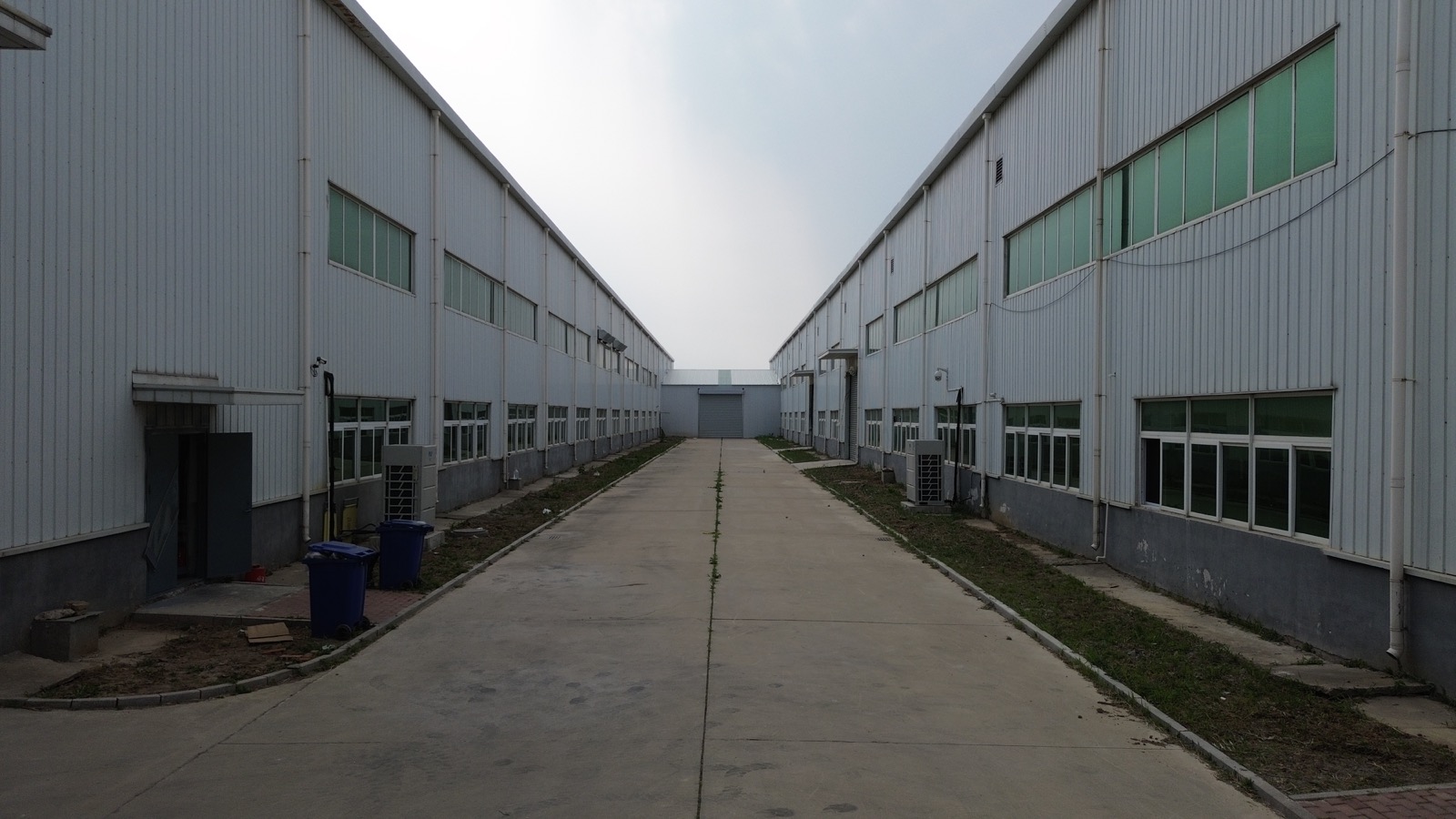
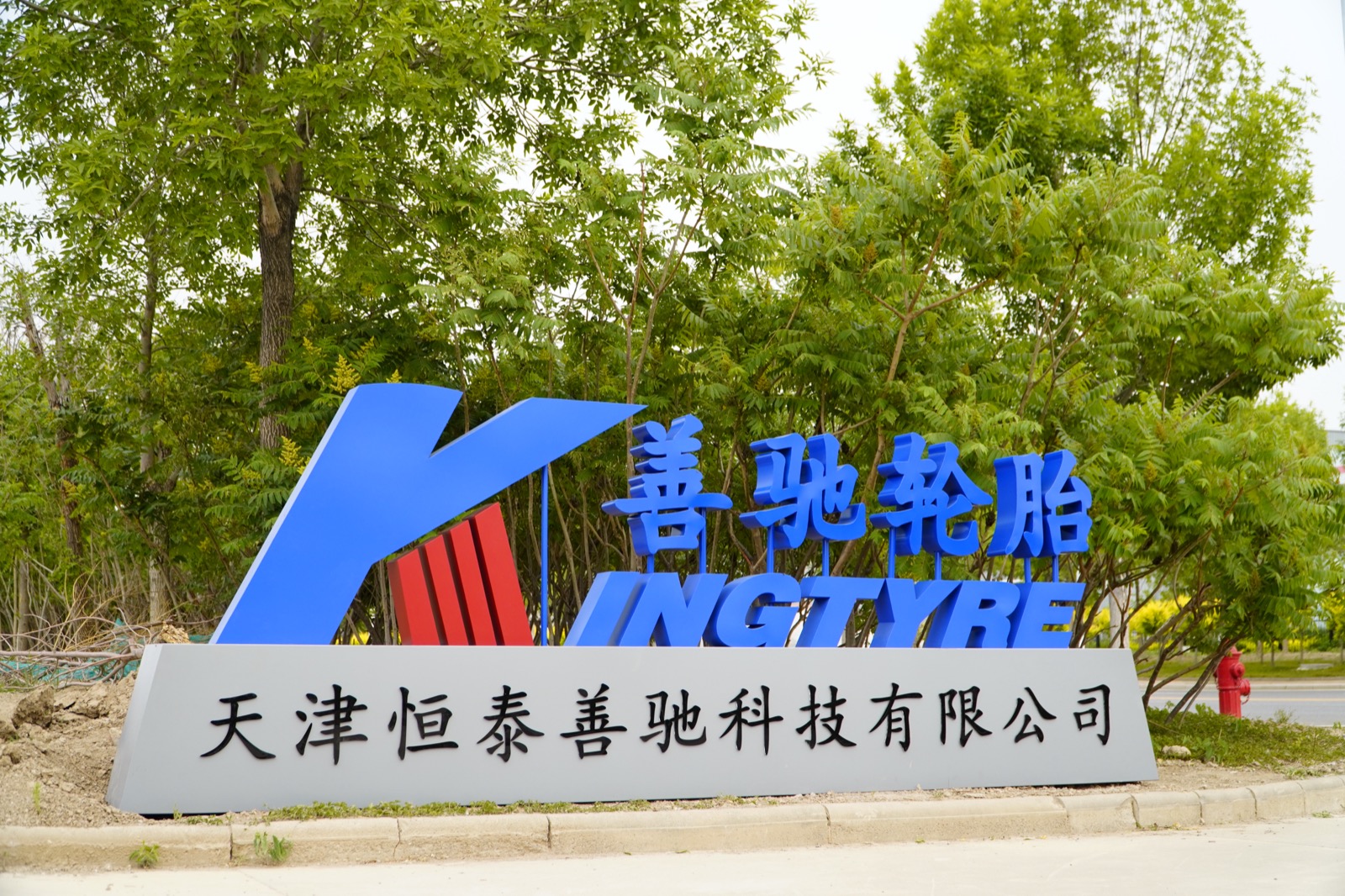
Related: KingTyre factory background. The wholesale process below assumes you already have a shortlist of credible suppliers. For a full walkthrough of KingTyre’s manufacturing capabilities, 45-country export footprint, ECE R75 / DOT / ISO 9001 certification matrix, and how to verify each one, see the dedicated China Motorcycle Tire Manufacturer Factory hub.
China remains the world’s largest motorcycle tire producer, but the market has changed. The cheap-tire era is over: since 2023, serious Chinese manufacturers have consolidated around certified production, radial technology, and racing programs. For a distributor or importer, that shift is an opportunity, because it means you can source factory-direct quality instead of trading through three layers of middlemen.
Three structural advantages make China the default sourcing market in 2026:
1. Cost per container. Factory-direct pricing on a mixed 20GP container of popular sizes typically lands 20-40% below equivalent European, Japanese, or Taiwanese brands at wholesale level. The gap is largest on 17-inch sport sizes and dual sport ranges, where the production volume is highest.
2. Product breadth. A serious manufacturer like KingTyre produces racing slicks, semi-slicks, rain tires, dual sport, adventure, cruiser, scooter, and motocross lines in one factory. One supplier can fill an entire container with a balanced size mix — that is not possible with a niche factory.
3. Certification depth. ECE R75, DOT (FMVSS 119), ISO 9001, and export-grade packaging are now standard for export-oriented factories. In 2026, a supplier that cannot produce a verifiable E-mark or DOT certificate is a red flag, not a cost saving.
There is also a market-timing argument. Radial motorcycle tire demand is growing fastest in Europe, Southeast Asia, and Latin America, and China is the only market where radial motorcycle tire production capacity is expanding at scale. Importers who build a factory relationship this year will have first access to the radial sizes their competitors cannot stock.
Every wholesale import follows the same seven steps. The diagram below is the 30-second version.
Inquiry → Quotation → PI (Proforma Invoice) → Sample approval → Production → QC inspection → Container shipment
Send the supplier your target sizes, estimated annual volume, and destination market. A good inquiry includes the exact sizes (e.g., 120/70ZR17 and 180/55ZR17), the intended use (street, track, adventure), and the certificate requirement for your market (ECE R75, DOT, or both).
Ask for a FOB quote per size, MOQ, and lead time. Request the quote in writing and check that it specifies the Incoterm, currency, and validity period. KingTyre quotes FOB Tianjin in USD with a 30-day validity as standard.
The PI locks the price, quantity, payment terms, and delivery date. Once you sign it, production planning begins. Treat the PI as a contract — it should include the full size list, unit prices, total value, and bank details.
For a new supplier or a new private label, samples are non-negotiable. Ask for physical samples of your top two sizes, plus the certificate PDFs. Check the sidewall markings against the E-mark number in the UNECE database and the DOT code format.
Typical production runs 30-45 days after deposit and sample approval, depending on compound and branding. Stock sizes can ship faster. The factory should send you a production schedule and progress photos.
Use a third-party inspector (SGS, Bureau Veritas, TUV) for your first two shipments. The report should cover tire dimensions, bead fit, sidewall marking accuracy, and packaging.
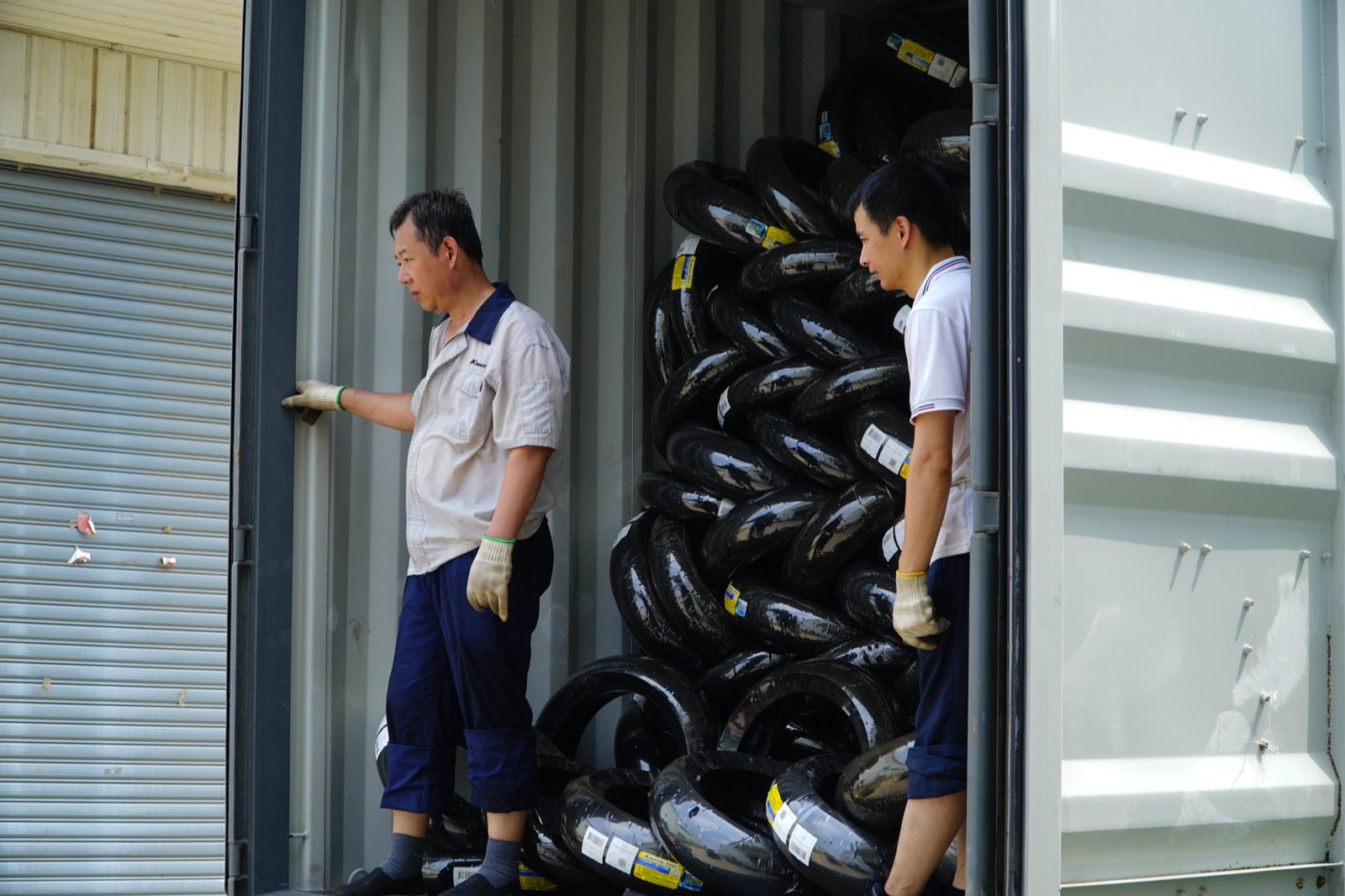 After two clean inspections, you can move to factory inspection reports plus random photos.
The factory books the vessel, delivers to the port, and sends you the shipping documents: commercial invoice, packing list, bill of lading, certificate of origin, and any market-specific certificates (ECE/DOT documents, Form E for ASEAN).
Motorcycle tires are bulky for their weight, so containers fill by volume before weight. The table below gives realistic working estimates for standard export packaging.
| Container | Usable volume | Typical mixed motorcycle tire load | Typical units |
|---|---|---|---|
| 20GP | ~28 CBM | 50/50 mix of front + rear sport tires (120/70R17, 180/55R17) | 450-550 tires |
| 40GP | ~58 CBM | Same mix, standard palletized cartons | 950-1,100 tires |
| 40HQ | ~68 CBM | Same mix, standard palletized cartons | 1,100-1,300 tires |
Real loads depend on three variables:
1. Size mix. Small scooter sizes (e.g., 3.50-10) load roughly 30-40% more units per CBM than 17-inch sport tires. Large cruiser sizes (180/65B16, 260/35VR21) load fewer.
2. Packaging. Unpalletized cartons maximize units but raise handling risk. Pallets protect the stock and speed up unloading but consume 8-12% of the container volume.
3. Rim width and profile. A 120/70ZR17 front tire occupies about 0.08-0.10 CBM; a 180/55ZR17 rear about 0.10-0.13 CBM. Ask the supplier for a packing list by size before you confirm the order, and let them calculate the exact load per container.
For importers, the practical rule is simple: a 20GP is the standard first order, and a 40HQ gives the best cost per tire. Most distributors start with a mixed 20GP, validate sell-through, then move to 40HQ.
FOB (Free On Board) means the seller delivers the goods onto the vessel at the port of shipment. Everything after that — ocean freight, insurance, destination port charges, and import duty — is the buyer’s responsibility. Your FOB price is the sum of four components:
1. Ex-factory price. The unit price of the tires, set by size, compound, certification, and volume. This is where most negotiation happens.
2. Inland freight. Trucking from the factory to the Tianjin port. For a factory near Tianjin this is modest; for inland factories it can add meaningfully to the FOB cost. A supplier’s location matters more than most buyers expect.
3. Port charges. Container handling, THC (terminal handling charge), customs declaration, and export inspection. These are usually flat fees per container.
4. Documentation fees. Commercial invoice, packing list, bill of lading, certificate of origin, and certificate fees.
Why this matters: when two quotes look different, the first thing to compare is what is included in FOB. One supplier’s “FOB” may exclude inland freight or certificate costs; another includes everything. Ask for a line-item breakdown rather than a single number.
For a typical mixed container from Tianjin, port and documentation costs add roughly 2-5% to the ex-factory value, depending on container size and certificate requirements. That is why a 40HQ improves your landed cost per tire: the fixed port costs spread across more units.
Payment terms are the second biggest negotiation point after price. Each structure fits a different buyer profile.
The standard for China exports: 30% deposit, 70% against the copy of the bill of lading. The deposit covers material costs and reserves production; the balance is paid when the goods are shipped. T/T is simple, fast, and suitable for first orders and repeat orders alike.
A confirmed, irrevocable L/C at sight works when the buyer’s bank requires more formal protection, or when the order value is large enough to justify the bank fees. L/Cs add document discipline — every document must match the credit terms exactly — so allow extra time for document preparation.
The difference between a good import and a bad one is usually decided before the first container is loaded. Use this checklist on every shortlisted supplier.
1. Certification documents. Request the ECE R75 certificate, DOT compliance documentation, and ISO 9001 certificate. Verify the E-mark approval number against the UNECE public database. A certificate that cannot be traced is worthless.
2. Real production. Confirm the factory owns its production lines rather than trading another factory’s stock. A live video call through the production floor, plus a business license showing manufacturing scope, filters out most trading companies.
3. Quality control process. Ask how incoming materials, in-process tires, and finished goods are inspected. Export-grade factories test dimensions, balance, and sidewall markings at defined checkpoints. Ask for their QC pass rate and how they handle defective stock.
4. Export records. Ask for references from two or three distributors in non-competing markets. Check the company’s customs export history if available. A factory that has shipped to Europe, Latin America, and Southeast Asia has documented experience with the paperwork your market needs.
5. Bank standing. Request the company’s bank details and, for larger orders, a bank reference letter. The bank name, the business license, and the invoice should all match. Inconsistency here is a deal-breaker.
KingTyre ships to distributors, racing teams, and private-label brands in more than 45 countries. Three anonymized examples show how the process works in the real world.
Case A — European distributor (ECE markets). A first-time buyer ordered a mixed 20GP of ECE-certified 17-inch sport and dual sport sizes, started with 30/70 T/T, and ran third-party inspection on the first shipment. After two clean containers, they moved to a scheduled quarterly 40HQ program and added private-label branding.
Case B — Latin American importer (DOT/INMETRO markets). The buyer needed DOT-certified stock with fast turnarounds. KingTyre held a small DOT-certified buffer in the warehouse, cut the production-to-shipment window, and the importer grew from one container a quarter to one a month within a year.
Case C — Racing team supply (small-batch). A race team needed K00 slicks and K01 rain tires in mixed compound splits for a championship season. Small-batch direct shipment with full certificates meant the team could import legally and reliably without holding large inventory.
The common thread is not price — it is documentation reliability and consistency of quality across containers. That is what keeps distributors reordering.
Is the FOB price negotiable?
Yes, within reason. Volume is the strongest lever: a committed 40HQ program gets better unit pricing than a single 20GP. Negotiate the price per size on an annual volume commitment, not just the first container.
What is the MOQ?
For a mixed-size container, the standard MOQ is one 20GP (roughly 450-550 tires depending on sizes). Private label branding may have its own MOQ per size, usually higher for custom sidewall printing.
How long does production take?
Stock sizes ship in 7-15 days. New production runs typically take 30-45 days after deposit and sample approval. Custom branding adds 7-10 days for sidewall printing and packaging.
Can I mix tire models in one container?
Yes, and we recommend it for the first order. Mixing street, adventure, and cruiser lines lets you test demand before committing to full-size programs. The factory calculates the exact loading plan so you use the container volume efficiently.
How do I know the supplier is a real factory?
Use the five checks above: verifiable certificates, live production video, QC process, export references, and matching bank details. Add a third-party inspection on the first shipment if you need an extra layer of confidence.
What documents do I get with each shipment?
Commercial invoice, packing list, bill of lading, certificate of origin, and the applicable tire certificates (ECE R75 / DOT). For ASEAN markets, Form E can be arranged where the destination qualifies.
The importers who succeed in 2026 start with a size plan, a container plan, and a target landed cost — then find a factory that fits. A good supplier makes the paperwork boring and the quality repeatable.
If you are planning your first or next motorcycle tire import, start with a concrete quote:
Contact the KingTyre factory for a wholesale catalog and container quote: Request a Wholesale Catalog.
Related reading:
– China Motorcycle Tire Manufacturer Factory: Why KingTyre Leads Radial Innovation
– China’s Radial Motorcycle Tire Manufacturer: What Distributors Must Verify
– How to Build Your Own Motorcycle Tire Brand: Private Label & OEM Guide
– KingTyre K00 Racing Slicks
– KingTyre K66 80/20 ADV Tires
– KingTyre K91 Cruiser Tires
 German
  English
  Spanish
  French
  Korean
  Japanese
  Italian
  Russian
  Dutch
Dutch  Danish
  Portuguese
  Polish
  Turkish
  Czech
Czech