
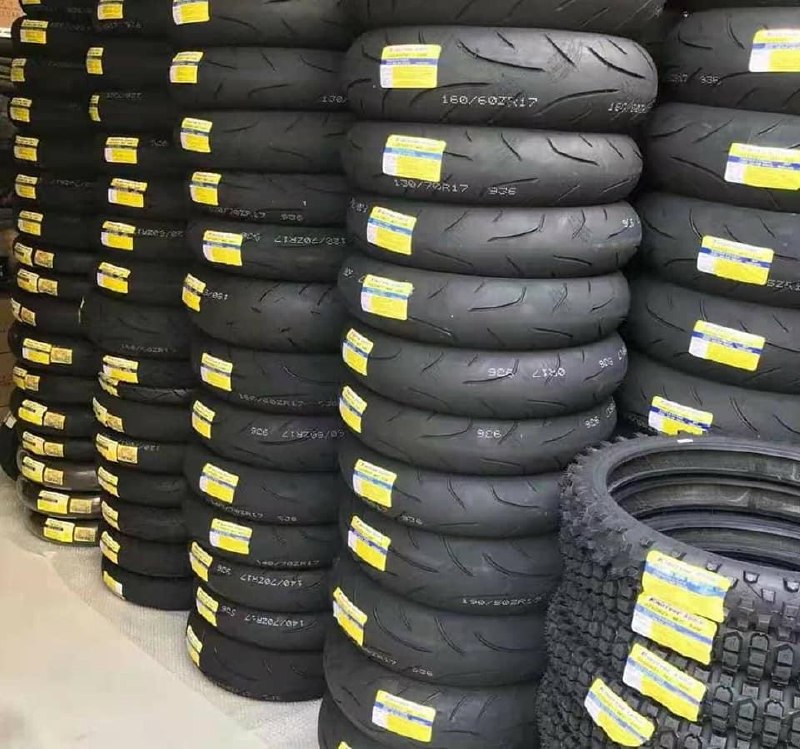
When it comes to motorcycle safety and performance, the DOT ECE tire codes stamped on your tire’s sidewall are essential information that reveals your tire’s capabilities and certifications, helping you choose the right rubber for your bike and your specific riding conditions.
DOT stands for the Department of Transportation, the U.S. federal agency that regulates tire safety. When a tire displays the DOT marking, it means the tire has been certified for use on public roads in the United States — a legal requirement for any tire sold in the American market.
Every DOT-certified tire carries a unique DOT code that reveals three key pieces of information: the manufacturing location (Plant Code), the batch and week of production (Date Code), and the tire type identifiers.
The DOT code typically appears as something like: DOT 4A23 1224
ECE stands for the Economic Commission for Europe, and an ECE certification means the tire meets the safety and performance standards required in European markets — a certification that is recognized in over 60 countries worldwide. It is shown as a circle containing the letter “E” followed by a number; for example, E4 represents the Netherlands while E9 represents Spain.
An ECE-approved tire has passed rigorous testing across four key areas: braking performance, high-speed capability, rolling resistance, and noise levels — giving riders confidence that the tire meets strict European safety thresholds.
Understanding these codes serves several practical purposes that directly affect your safety, compliance, and riding experience:
Tires degrade over time even without use, which is why the DOT and ECE date codes are essential for determining a tire’s age. Most manufacturers recommend replacing tires that are 5-6 years old regardless of tread depth, and you can learn how to check if your tires need replacing in our detailed guide.
If you are importing tires or riding in different countries, knowing these certifications ensures you remain street-legal in your destination. DOT certification is required for U.S. roads, while ECE covers most of Europe and many other countries around the world, so always verify the requirements of your destination before riding across borders.
Different speed ratings and load indices on certified tires help you choose the right rubber for your specific riding style, whether you are cruising highways, touring cross-country, or attacking track days. Our tire selection guide explains the differences between ratings and how they affect your bike’s performance.
Your tire’s sidewall contains several important markings that tell you everything about the tire’s capabilities. Here is a quick reference:
| Marking | Meaning |
|---|---|
| DOT | US Department of Transportation certified |
| ECE | European Economic Commission approved |
| E | European approval mark |
| T | Maximum speed: 118 mph (190 km/h) |
| H | Maximum speed: 130 mph (210 km/h) |
| V | Maximum speed: 149 mph (240 km/h) |
| W | Maximum speed: 168 mph (270 km/h) |
| SL | Service Load index |
| PR | Ply Rating |
The tire size marking (for example, 120/70-17) contains essential dimensional information where each number has a specific meaning:
Combined with the DOT and ECE codes, these numbers give you a complete picture of whether a tire is right for your bike and your riding conditions. Check our pricing guide to explore options that match your specific requirements.
Your motorcycle tires speak a technical language, and DOT and ECE codes are your window into a tire’s safety history, manufacturing date, and regulatory compliance. These DOT ECE tire codes matter for every rider who wants to stay safe on the road and get the right performance from their bike.
Before your next ride, take a moment to read what your tires are telling you — your safety depends on understanding these codes, and now you know exactly what they are saying.
The DOT code is stamped on the sidewall, so look for the letters “DOT” followed by numbers. In the code DOT 4A23 1224, the sequence tells you the manufacturing plant, the production year, and the week of manufacture — the last four digits (1224) represent the 12th week of 2024.
DOT certification is primarily for U.S. road legality, but for European road use you also need ECE certification. The good news is that many tires carry both marks, which makes them legal in most countries worldwide. Look for the “E” mark alongside the DOT code when shopping for tires intended for international use.
Most manufacturers recommend replacing tires after 5-6 years from the date of manufacture, regardless of tread depth. Use the DOT or ECE date code stamped on the sidewall to check the tire’s age. Old tires develop micro-cracks in the rubber that compromise safety even if the tread looks fine, making age checks an essential part of routine maintenance.
It depends entirely on where you ride. In the United States, DOT certification is legally required, while in Europe and ECE-recognized countries you should look for the “E” mark. For international riders or importers, both certifications provide the broadest possible market compliance and peace of mind.
No — speed ratings (H, V, W, and others) indicate the tire’s maximum safe speed, not its durability. In fact, higher-rated tires often use softer rubber compounds for better grip, which can actually mean faster wear. Always match the rating to your actual riding conditions rather than simply opting for the highest number available.
For more information on selecting the right motorcycle tires, explore our guide to the best tire brands.
To learn more about tire regulations and standards, visit the National Highway Traffic Safety Administration (NHTSA) for U.S. standards, or the UNECE Vehicle Regulations for international standards.
 English
  Spanish
  French
  German
  Korean
  Japanese
  Italian
  Russian
  Dutch
Dutch  Danish
  Portuguese
  Polish
  Turkish
  Czech
Czech