Quick answer: Yes — KingTyre is one of the rare Chinese motorcycle tire factories that combines certified OEM-grade manufacturing with radial technology and a real racing program. Based in Tianjin with 15,000 m² of production floor, 150+ SKUs, and 300,000 tires/year capacity, we ship ECE R75 / DOT / ISO 9001 certified product to distributors, racing teams, and OEM brands in more than 45 countries. This page is what a serious B2B buyer should verify before signing a supply agreement.
Chinese motorcycle tire exports crossed 110 million units again in 2024, and the number of ECE R75 type approvals held by Chinese factories more than doubled between 2020 and 2024. The narrative that every Chinese tire is a compromise product is ten years out of date.
Three structural shifts explain the change:
1. Certification depth. In 2020, only a handful of Chinese factories held multiple ECE R75 approvals across product lines. In 2026, the major export-oriented producers — KingTyre included — carry ECE R75, DOT (FMVSS 119), ISO 9001, and CCC as standard. Verification happens through the UNECE public database; the certificate is either valid or it isn’t.
2. Compound and process investment. The cheapest commodity tires are still made by factories chasing volume at any cost. The manufacturers that supply racing teams and Western distributors have invested in compound R&D, automated building drums, and X-ray / uniformity inspection. That equipment shows up in audit visits and certificate copies, not in marketing copy.
3. Racing as proof. A factory that supplies K00 slicks and K01 rain tires to a Le Mans 24H endurance team cannot cut corners on production without the data becoming public within a season. Racing programs are the most expensive quality-control audit any tire factory can run.
For a B2B buyer, the practical implication: Chinese motorcycle tire manufacturing in 2026 is split into two tiers. The price-leader tier still exists — cheap, uncertified, suitable for short-life commuter use. The certified-export tier is a different market: ECE / DOT approved, racing-validated, and supplying distributors who need documentation reliability. KingTyre sits firmly in the second tier. If you are sourcing for an OEM brand, an ECE-market distributor, or a racing team, that distinction is the entire conversation.
Located in Tianjin’s manufacturing belt, the KingTyre complex holds a 15,000 m² covered production footprint with dedicated lines for street, track, adventure, off-road, and cruiser applications.
Headline specs:
What those numbers mean for a wholesale customer. The reason these numbers matter is they answer the two questions every serious distributor asks in the first email: “Can you handle my annual volume?” en “Can you run my private label?” A 300,000-tire annual capacity covers most regional distributor programs (typical mid-size program is 20,000–40,000 tires/year) with room to spare. The 150+ SKU count means you can run a mixed 20GP container from a single supplier rather than juggling two or three factories to fill a price list.
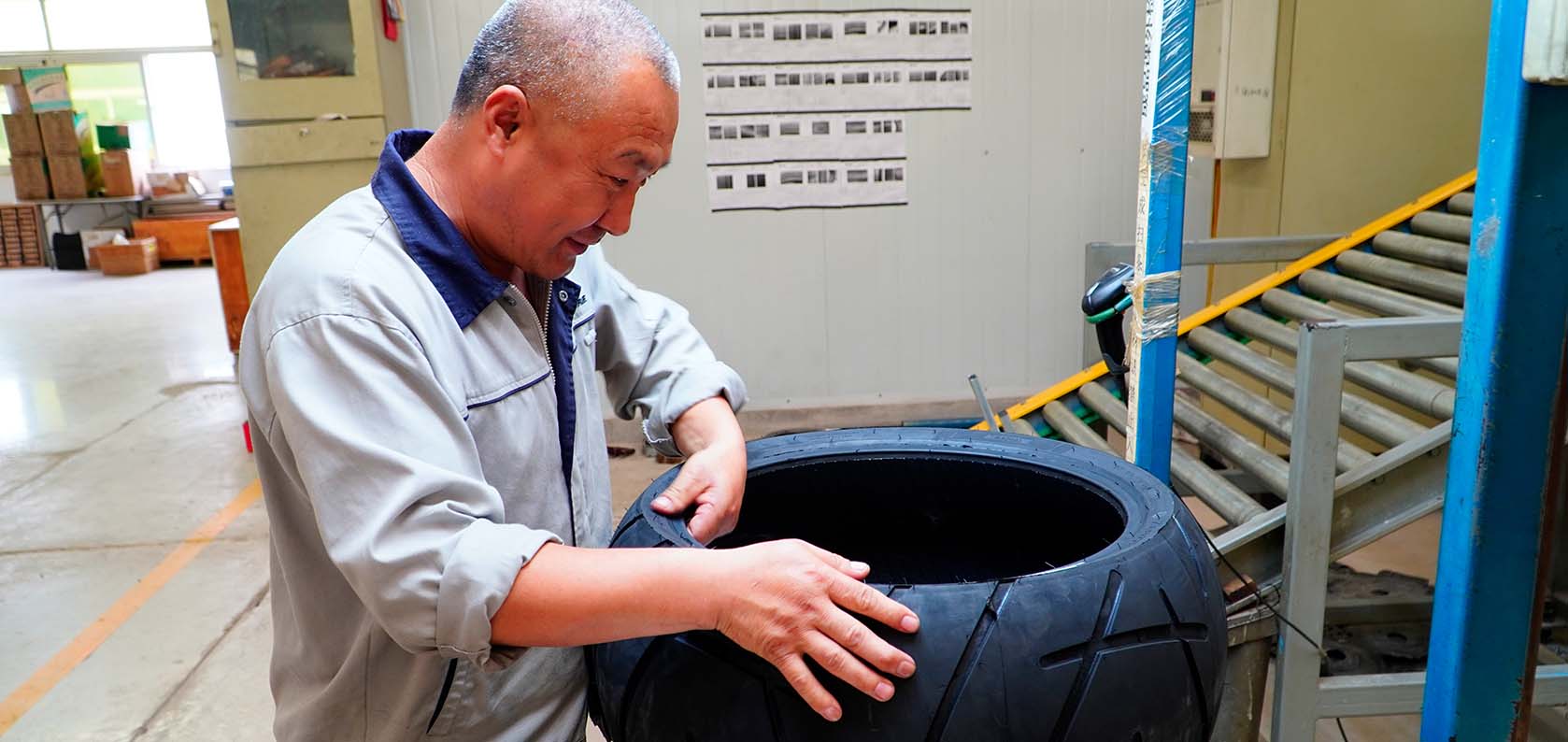
Custom compounding capability. Beyond standard products, KingTyre’s compound lab develops and tests custom rubber compounds for racing teams and OEM customers who need specific grip, wear, or heat-cycle characteristics. This is not a marketing line — it is the difference between a factory that sources compounds from a third party and one that mixes its own. Compound ownership is why our K00 slicks ship in four distinct compounds (Super Soft / Soft / Medium / Hard), and why private-label customers can specify wear life or wet-grip targets when they place an order.
KingTyre is the only Chinese motorcycle tire factory producing radial motorcycle tires at scale. This is not a marketing claim — it is verifiable through the production line and the product portfolio. While several Chinese manufacturers produce bias-ply motorcycle tires, very few have invested in the building equipment, curing presses, and quality-control instrumentation needed for radial motorcycle tire production.
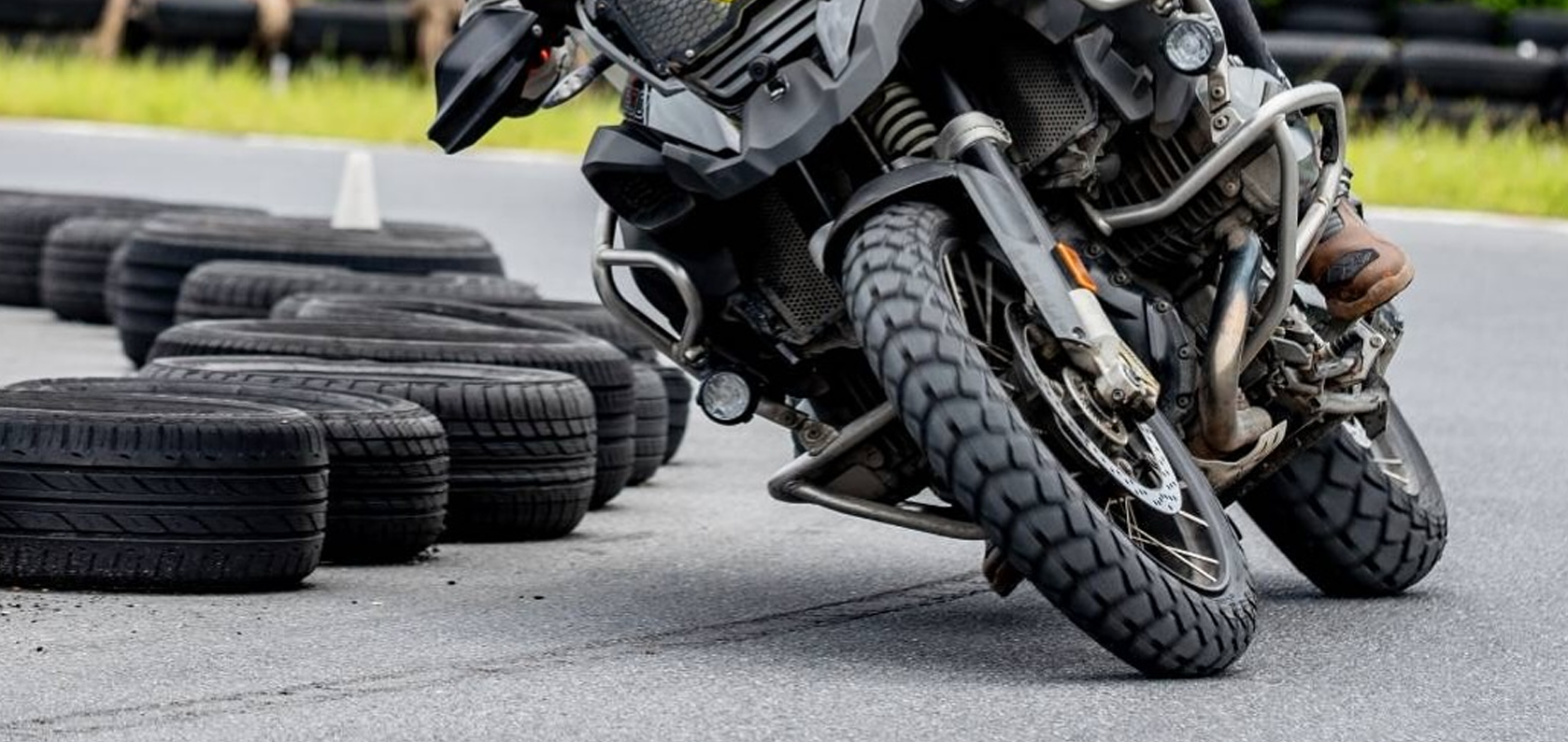
The technical difference, in one paragraph: a bias-ply tire uses multiple layers of nylon or polyester cords running diagonally across the tire, with each layer crossing the next. A radial tire uses a single layer of steel or aramid belt running radially across the carcass, with a separate belt package stabilizing the tread. The radial construction produces a softer sidewall, which means the tread stays flatter on the road during cornering — more contact patch, more grip, more consistent wear. The trade-off is cost: radial motorcycle tire production requires more precise building equipment, tighter quality tolerances, and more sophisticated compound control.
Why this matters for buyers:
For distributors evaluating a Chinese motorcycle tire manufacturer, the presence of a radial production line is a proxy for the whole operational standard. Factories that can run radial are typically investing more broadly in process control, instrumentation, and quality. If you are talking to a Chinese factory and they cannot tell you whether they make radial or only bias, that is a meaningful signal.
Each certification is independently verifiable. A certificate that cannot be confirmed in the relevant public database is, for B2B purposes, worthless. The table below shows what KingTyre holds and where to confirm each one.
| Certificering | Coverage | Issuing body | How to verify |
|---|---|---|---|
| ISO 9001:2015 | Quality management system | Accredited certification body | Request current certificate PDF; verify accreditation chain |
| ECE R75 | Type approval for motorcycle tires sold in EU, UK, most of Asia and Latin America | UNECE member-state authority (e.g., E4 Netherlands, E11 UK) | Look up approval number in UNECE public database |
| DOT / FMVSS 119 | U.S. Department of Transportation compliance for US-bound product | Self-certified, with audit trail | Verify DOT serial format on sidewall (e.g., DOT XXXXXX 2624) |
| CCC | China Compulsory Certification for products sold in mainland China | CNCA | CNCA public database |
| INMETRO | Brazil | INMETRO | INMETRO database |
| JIS | Japan (selected sizes) | Japanese Industrial Standards | JIS database |
What distributors actually check.
The single most important rule: if a supplier’s certificate cannot be independently verified, walk away. B2B buyers in any major market have access to public databases — UNECE, DOT, CCC, INMETRO. A supplier who refuses to share the certificate, or who provides a certificate that does not match the public database, is not a supplier you want to scale with.
KingTyre ships to distributors, racing teams, and private-label brands in more than 45 countries, across four major regional clusters.
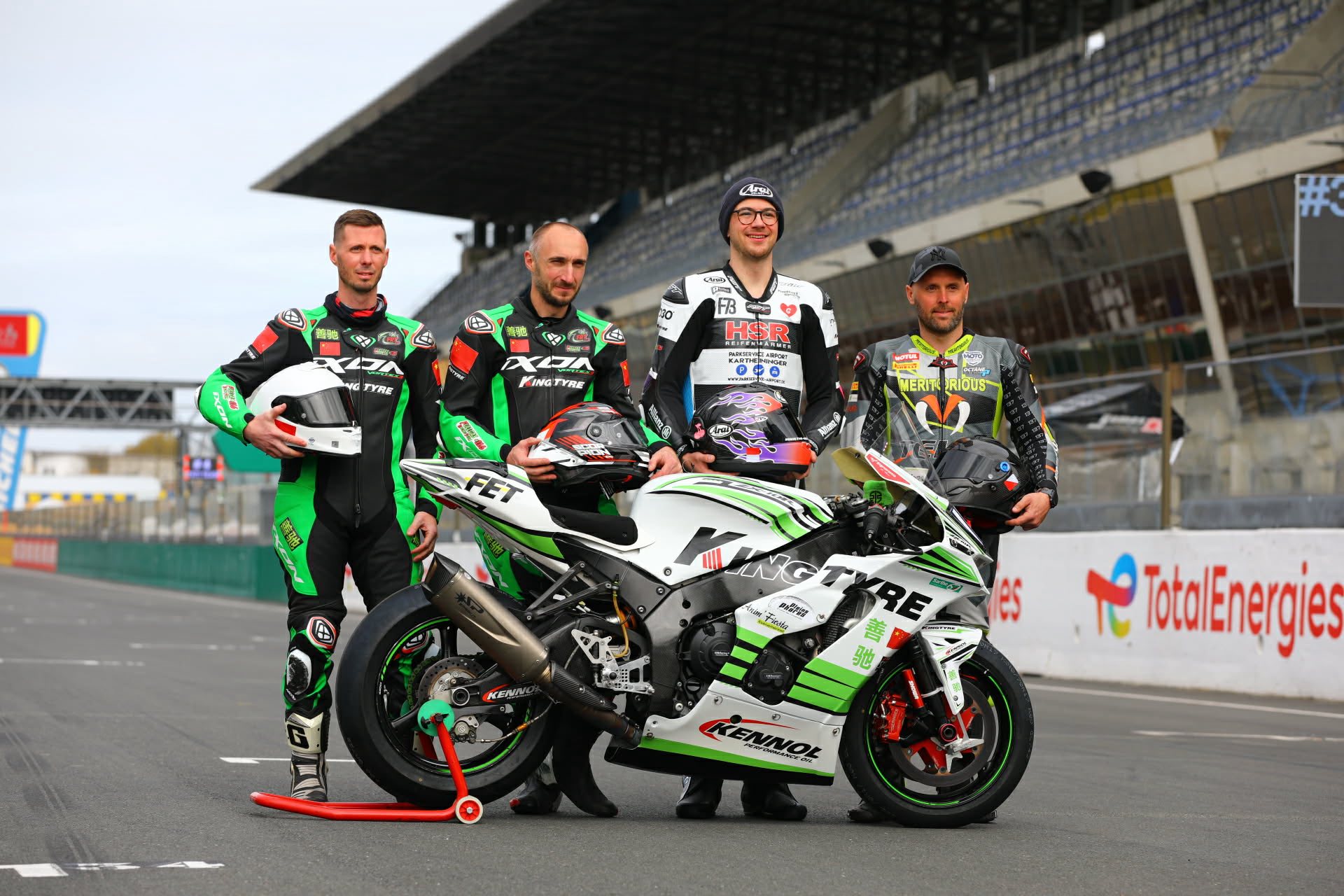
Europe and the UK (15+ countries). The largest cluster by revenue. ECE R75 certification is the baseline. Key markets include Germany, France, Italy, Spain, the Netherlands, the UK, Poland, and Greece. The European market values private-label and racing pedigree — the Le Mans program has driven significant inbound distributor interest since 2022.
Latin America (10+ countries). Brazil (INMETRO), Mexico, Colombia, Argentina, Chile, and others. DOT compliance matters for several markets; INMETRO for Brazil specifically. Latin American motorcycle culture has a strong track-day and racing component, which is where our K00 / K06 / K01 lines see demand.
Asia-Pacific (12+ countries). Indonesia, Vietnam, Thailand, the Philippines, Malaysia, and others — the largest single region by unit volume. These markets typically want CCC-equivalent safety plus cost-competitive pricing, and they are growing fast.
Africa and Middle East (8+ countries). Egypt, South Africa, Kenya, the UAE, Saudi Arabia, and others. A mix of DOT- and ECE-equivalent requirements, with price sensitivity higher than Europe.
The most important thing for a buyer to know: the regional split tells you what certifications and what products you should expect to see in the catalog. A factory that claims “45 countries” but cannot show you a recent shipment to an ECE market — with the matching type-approval documentation — is probably overstating the claim. KingTyre can produce shipping records and customer references, with appropriate non-compete redaction, for any region above.
What this timeline shows: manufacturing credibility is built over years, not quarters. The 2022 Le Mans entry marked a transition point — racing validation forced our process control to a level that export markets actively require. Before that, we were an established export manufacturer; after, we were a manufacturing partner with verifiable proof.
If you are evaluating KingTyre as a potential supplier — and we strongly recommend visiting or video-walking any shortlisted supplier before the first container — here is what a visit looks like.
Pre-visit documentation. Before any factory walkthrough, request:
On-site checkpoints.
Post-visit decision. A visit either confirms the factory can handle what you need or surfaces the gaps. Either result is useful. The most expensive imports happen when a buyer commits to a supplier without sufficient first-hand verification.
What is KingTyre’s minimum order quantity (MOQ)?
For a mixed-size container, the standard MOQ is one 20GP container, typically 450–550 tires depending on the size mix. Private-label orders may have additional per-size minimums for custom sidewall printing. Custom compound development requires a sample order and a production commitment.
Where is KingTyre located?
The KingTyre production complex is in Tianjin, China — within practical trucking distance of Tianjin port, the main export shipping point for North China. Sales and export operations are based in the Tianjin headquarters.
How long does production take?
Stock SKUs ship within 7–15 days. New production runs typically take 30–45 days after sample approval and deposit. Custom branding (sidewall printing, packaging) adds 7–10 days.
Can KingTyre handle private-label branding?
Yes. Private-label and OEM manufacturing is a core part of the offering. We can print your brand on the sidewall, customize the packaging, and develop a custom compound specification if needed. Lead times and MOQ for private label depend on the size program and any compound development.
What certifications does KingTyre hold?
ISO 9001:2015, ECE R75 (multiple product lines), DOT (FMVSS 119) for US-bound product, CCC for China mainland, INMETRO for Brazil, and JIS for selected Japan-bound sizes. Each certificate can be verified against the relevant public database.
Can I tour the factory before placing an order?
Yes. On-site factory tours are encouraged for serious buyers and typically scheduled with 2–3 weeks of advance notice. For buyers who cannot travel to China, we run live video walkthroughs of the production floor, QC area, and warehouse.
Does KingTyre ship direct to distributors, or only through trading companies?
We ship direct to distributors, racing teams, and OEM brands in more than 45 countries. Trading-company relationships exist in markets we do not directly service, but our default mode is direct factory-to-buyer.
What makes KingTyre different from other Chinese motorcycle tire manufacturers?
The combination of certified radial production, a real racing program (Le Mans 24H endurance), and direct-to-distributor export experience across 45+ countries is rare among Chinese motorcycle tire factories. Most Chinese manufacturers produce bias-only, do not run racing programs, and operate primarily through trading intermediaries.
If you are evaluating KingTyre as a potential manufacturing partner, the next step is a concrete conversation: what sizes, what volume, what market, what timeline. From there we can prepare a written FOB Tianjin quotation, a sample plan, and a production schedule for your review.
Contact the KingTyre factory for a wholesale catalog or factory tour: Request a Factory Tour.
Related reading:
 Dutch
Dutch  English
  Spanish
  French
  German
  Korean
  Japanese
  Italian
  Russian
  Danish
  Portuguese
  Polish
  Turkish
  Czech
Czech